Fuel prices Morocco: what a road trip really costs
Fuel prices Morocco travelers worry about most are diesel and regular unleaded, and the honest answer is: it’s not going to break your road trip budget, but it’s also not the two or three euros a litre you might be used to in parts of Western Europe. Prices are set weekly by the market since the government ended subsidies back in 2015, so they do move, usually by small amounts, and they’re the same at every station whether it’s a big chain or a roadside pump outside Ouarzazate.
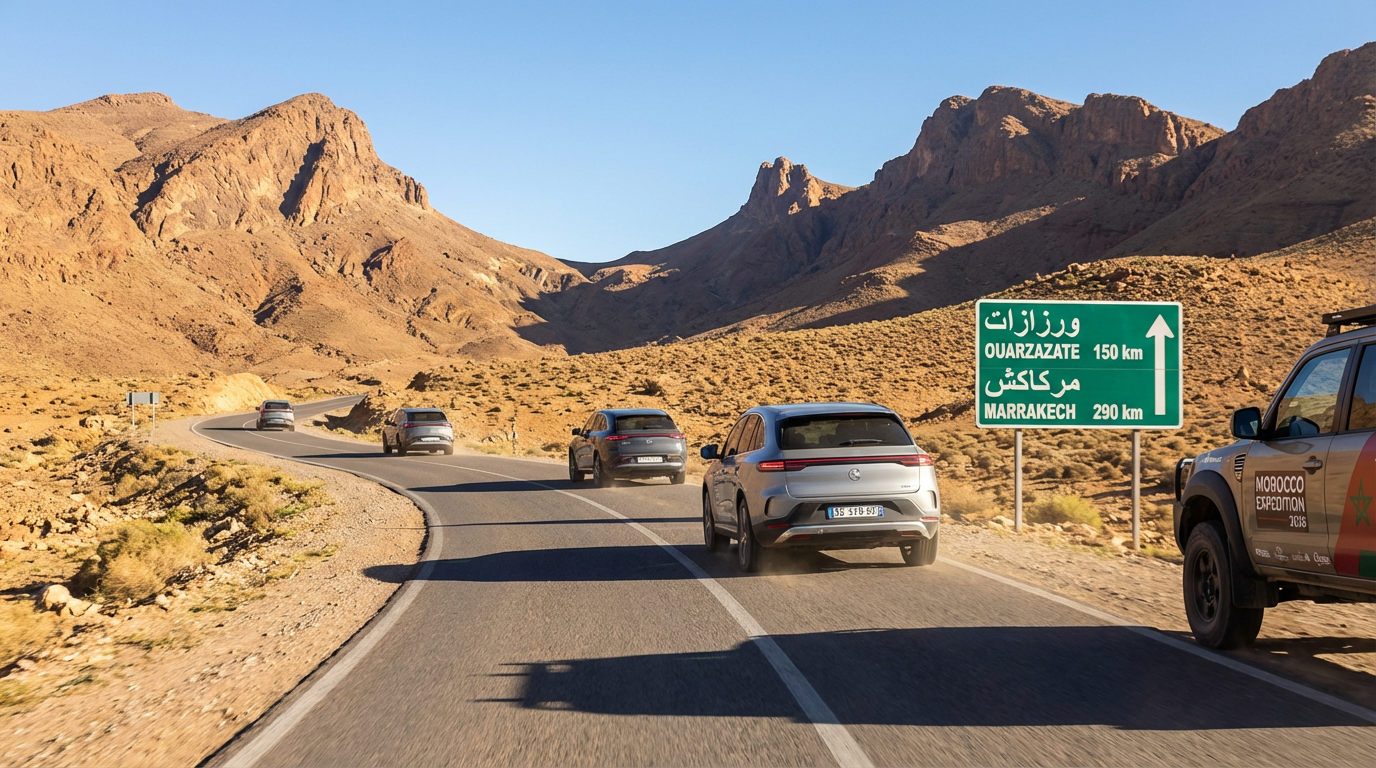
Fuel prices in Morocco: diesel vs petrol
As a rough guide, expect diesel (gasoil) to run a bit cheaper than petrol (essence), with both typically landing somewhere in the low-to-mid teens of dirhams per litre. Exact numbers shift week to week with global oil prices, so rather than quote you a figure that might be stale by the time you land, check the price board at any Afriquia, Shell or Total station when you arrive, it’s posted clearly and in dirhams, no guessing required. Most rental cars at Marralux run on diesel, which generally works out slightly more economical over a multi-day loop through the Atlas or down to the Sahara.
Card payment is widely accepted at the bigger chains in cities and on the main highways. Smaller stations in rural areas, especially past Ouarzazate or toward Merzouga, often want cash, so keep a reasonable amount of dirhams on hand rather than assuming a card will work everywhere.
Where fuel actually gets expensive on a Morocco road trip
The real cost driver isn’t the price per litre, it’s how much driving your itinerary involves. A loop that includes the Ouarzazate route and a push toward the desert will burn noticeably more fuel than a few days based in Marrakech with day trips. Mountain roads like the Tizi n’Tichka also use more fuel than flat highway driving, since you’re climbing in lower gears for long stretches; our Tizi n’Tichka pass guide covers that climb in more detail if it’s on your route.
A sensible rule: fill up before you leave a city, and don’t let the tank drop much below a quarter on any mountain or desert-facing stretch. Stations thin out fast once you’re past the main towns, and running low on a remote road at dusk is not where you want to be testing your Arabic or French.
Budgeting fuel into your rental
For a typical week-long loop covering Marrakech, the Atlas Mountains and a return trip, most travelers spend less on fuel than they expect, often less than their airport taxi cost both ways. Smaller, efficient cars obviously cost less to run than a full-size SUV, which is worth weighing against how much mountain or desert driving you’re actually planning. Our Morocco car rental cost guide breaks down the rest of what a trip costs beyond fuel, including deposits and insurance.
If you want specifics on current pump prices before you travel, Wikipedia’s page on global fuel pricing has background on how Morocco’s liberalized market compares to its neighbors, though for the actual number on the day, nothing beats checking the board at the pump.
Pick a car with the right fuel economy for your route before you fly out. Check our current fleet and compare consumption figures for the models that suit a Marrakech-based trip versus a longer desert loop, and ask us directly if you’re not sure which engine makes sense for your itinerary.
A few fuel habits that save you money in Morocco
Skip the attendant top-up extras if you’re not asked for them, standard fill-ups don’t need windscreen cleaning or oil checks unless you want them, and a polite “non merci” is all it takes. Fuel is slightly cheaper in smaller towns than in Marrakech or Casablanca city centers, so if you’re passing through somewhere like Taddert or Ait Ourir on the way out, it’s a reasonable spot to top up rather than waiting until you’re back in a big city. Air conditioning and a loaded roof box both push consumption up a bit on long highway stretches, worth knowing if you’re renting the smallest car in the fleet and packing it to the roof for a family trip.
Finally, keep your receipt if you’re renting with us, fuel policy on Marralux cars is straightforward (same-to-same, return with what you picked up), and a receipt avoids any back-and-forth at drop-off. It’s a small thing, but it’s the difference between a five-minute handover and an argument over a quarter tank nobody can quite agree on.