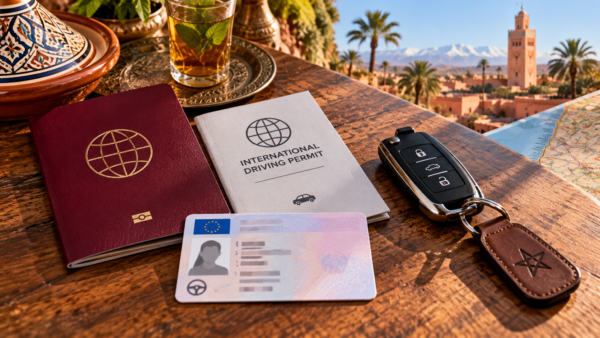
Driving in Morocco in Winter: The Essential 2026 Guide
Driving in Morocco in winter catches a lot of first-time visitors off guard. The brochures show sunny souks and desert dunes, and most of the country is warm enough in December that you’ll be fine in a t-shirt by midday. The part nobody mentions is that the Atlas Mountains, which every Marrakech-to-Sahara route has to cross, get genuinely cold and sometimes get snow. If you’re renting a car between November and February, here’s what actually changes.
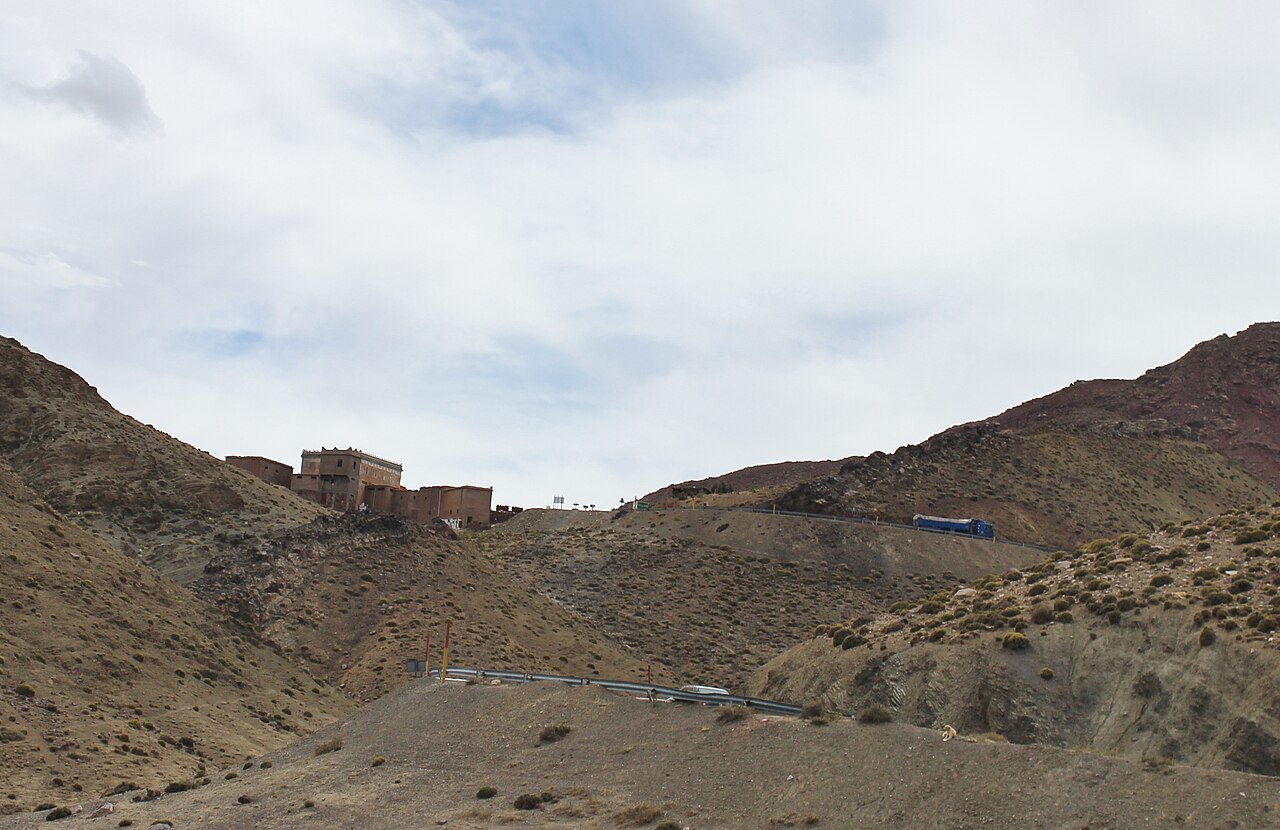
Driving in morocco in winter means watching the passes, not the coast
Coastal cities and Marrakech itself rarely see anything worse than a cold, rainy week. The problem is the high passes you’ll cross if you’re heading toward Ouarzazate, Zagora, or Merzouga. Tizi n Tichka, at around 2,260 metres, gets snow most winters, usually a handful of times between late December and February, and it’s occasionally closed for a few hours while crews clear it. Tizi n Test, the other route south, sits even higher and closes more readily. Neither closure tends to last more than a day, but if you’ve got a flight to catch or a desert camp booked, that’s a day you don’t want to lose.
Check conditions the morning you’re driving rather than the night before. Local radio and the Moroccan highway authority’s social accounts post closures faster than most travel apps do, and hotel staff in Marrakech or Ouarzazate usually know within an hour of a pass shutting.
What your rental actually needs to handle it
Most rental companies in Marrakech don’t carry snow chains by default, and honestly you won’t need them for more than a day or two most winters. What you do want is a car with reasonable ground clearance if you’re taking the mountain routes seriously, and tires that aren’t worn smooth, which is worth checking yourself at pickup rather than assuming. If snow is forecast and you can switch to an SUV or 4×4 for that leg of the trip, it’s worth the extra 150 to 250 MAD a day. Front-wheel-drive compacts can and do get stuck on the steeper switchbacks when there’s fresh snow and ice underneath it.
Night temperatures in the mountains regularly drop below freezing from December through February, and the desert isn’t exempt either: Merzouga and the dunes around it can swing from 20°C at midday to near 0°C after dark. That’s less a driving issue than a packing one, but it does mean windshields ice over overnight, so budget ten extra minutes in the morning before you set off.
The upside: winter is the easiest time to book
Demand drops hard outside the main season, and prices follow it. You’ll typically find rates 15 to 25 percent lower than the October or April peaks, and availability is rarely an issue even if you book a few days out rather than weeks in advance. Daylight is the real constraint. Sunset comes as early as 5:45 pm in December, roughly two hours earlier than in June, so plan your mountain driving for the morning and early afternoon rather than trying to clear a pass at dusk.
Fog is also more common in winter, particularly around Fes and in low-lying valleys early in the morning. It usually burns off by mid-morning, but it’s thick enough in patches that headlights and a bit of patience matter more than speed.
A quick pre-trip checklist
Before you set off on any mountain leg between November and February, it’s worth five minutes to check the pass status, confirm your rental’s tires and spare are in decent shape, and make sure you’re not relying on a phone with no signal for navigation once you’re above the tree line, since coverage on Tizi n Tichka and Tizi n Test is patchy at best. None of this is complicated. It’s just the kind of detail that doesn’t make it into the glossy season guides.
If you’re planning the Atlas crossing specifically, our guide to the Tizi n Tichka Pass covers the route in more detail, and our rundown of speed limits and radar zones is worth a read before any mountain drive, winter or not. For the broader safety picture, see is it safe to drive in Morocco, and make sure you’ve got the right paperwork sorted via our documents required to rent a car in Morocco guide. According to Wikipedia, the High Atlas range includes Jebel Toubkal, North Africa’s highest peak at 4,167 metres, which gives a sense of just how much elevation these roads actually gain.
Whether you’re based in Marrakech or arriving through Casablanca, check Marralux’s available vehicles before you book and ask specifically about winter tires or an SUV swap if your route crosses the Atlas between December and February.