
Car Rental Ouarzazate: Your Gateway to the Sahara Desert
Car rental Ouarzazate is usually the second half of a two-part decision, after you’ve already figured out how you’re crossing the Atlas from Marrakech. Ouarzazate itself calls itself the door of the desert, and it earns that nickname: this is where the film studios, the kasbahs, and the roads toward Zagora and Merzouga all converge. Whether you fly in, drive over the Tizi n’Tichka pass, or arrive by bus, what you do next usually depends on having your own car.
Flying in versus driving over the pass
Ouarzazate has its own airport with a handful of regional and seasonal flights, mostly connecting to Casablanca and a few European cities. If you fly in, renting a car at the airport saves you from negotiating taxi fares for every kasbah visit, since Ait Benhaddou, Taourirt, and the Atlas Film Studios are all a short drive apart but not realistically walkable between.
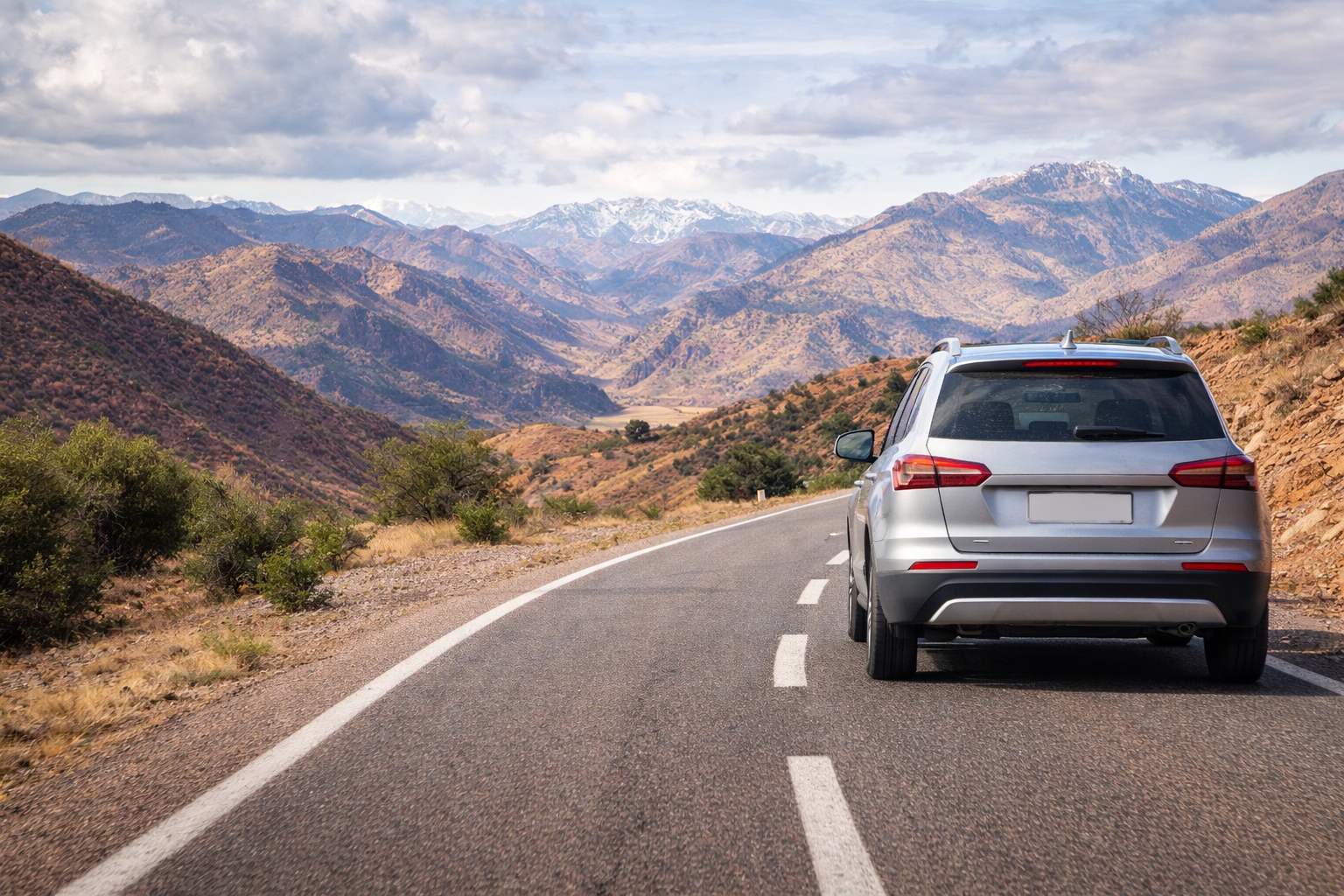
Most visitors, though, drive in over the Tizi n’Tichka pass from Marrakech, a route of roughly 200 km that takes three to four hours depending on how many photo stops you make, and that’s before traffic through the pass villages. If that’s your plan, it’s usually simpler to rent in Marrakech and drive the whole loop in one car rather than renting twice. Swapping cars in Ouarzazate only makes sense if you’re flying one direction, which is rare for this route.
What you’ll actually use the car for in Ouarzazate
Ait Benhaddou, the fortified village used in countless film productions, sits about 30 km from the town center, and having your own car means you can time the visit for early morning or just before sunset, when the light is better and the tour buses haven’t arrived yet. The Atlas Film Studios and the Taourirt Kasbah are both within a 10-minute drive of each other in town, so a car matters less there than for Ait Benhaddou.
Where the car becomes essential is if you’re continuing south. The road to Zagora runs about 165 km through the Draa Valley, lined with palm groves and kasbahs that most tour buses blow past without stopping. Having your own car means you decide where to pull over, not a driver with a schedule to keep.
Practical details for this specific route
Fuel stations are plentiful in Ouarzazate itself but get sparser heading toward Zagora or Merzouga, so fill up before leaving town rather than assuming you’ll find a station exactly when you need one. A full tank from Ouarzazate comfortably covers a return trip to Zagora with margin to spare.
The Tizi n’Tichka pass itself deserves a mention on its own. It’s a genuinely well-maintained road, but it’s also narrow in places with sharp switchbacks, and local trucks don’t always stick to their lane on the bends. Don’t rush it, and don’t attempt it for the first time after dark if you can avoid it. Daylight crossing is far less stressful, and the views are the whole point anyway.
If you only need the car for a day or two around Ouarzazate itself rather than the full desert loop, say so when you book. Agencies, ours included, price short local rentals differently than multi-day desert itineraries, and there’s no reason to pay for unlimited mileage you won’t use if you’re just doing the kasbah circuit.
Planning the rest of the route
Ouarzazate rarely stands alone on an itinerary. It’s typically one stop in a longer loop that includes the Draa Valley toward Zagora or the dunes near Merzouga. Our Marrakech to Atlas Mountains road trip guide and the full 7-day Morocco itinerary both cover how Ouarzazate fits into a longer trip, and if you’re weighing whether you need a 4×4 for the sand sections further south, our Morocco car rental guide breaks that down by route.
Book your Ouarzazate leg through our vehicle listing with the pickup point set to wherever your trip actually starts, Marrakech or the airport, and confirm the return location in writing if you’re not bringing the car back to the same city. One-way drop-offs between Marrakech and Ouarzazate are possible with us but carry a repositioning fee, so ask for that number before you commit to the route.