
4×4 Rental Morocco: Best Options for Desert and Mountain Trips
4×4 rental Morocco searches spike every year around the same question: do you actually need one, or will a regular SUV get you where you’re going? The honest answer depends entirely on your route. If you’re sticking to Marrakech, the Atlas passes, and paved roads to the desert gateways, a 4×4 is overkill. If you’re planning to leave the asphalt for dunes, dry riverbeds, or remote Berber villages, it stops being optional.
When you genuinely need four-wheel drive
The Tizi n’Tichka pass between Marrakech and Ouarzazate is fully paved, if winding, and any well-maintained sedan or SUV handles it without trouble, even in winter with occasional snow. Where things change is past Merzouga or Zagora, on the tracks into the Erg Chebbi or Erg Chigaga dunes. Those routes are sand, not road, and a two-wheel-drive car will bury itself within the first kilometer. Local guides in 4x4s are usually part of the package for that last stretch anyway, so you don’t necessarily need to rent the 4×4 yourself for the whole trip, just the final leg.
Where a 4×4 does earn its rental cost for the whole journey is the Dades and Todra gorges, parts of the Anti-Atlas, and any itinerary that includes unpaved mountain tracks between villages rather than the main routes. Ground clearance and traction matter there in a way they simply don’t on the highway.
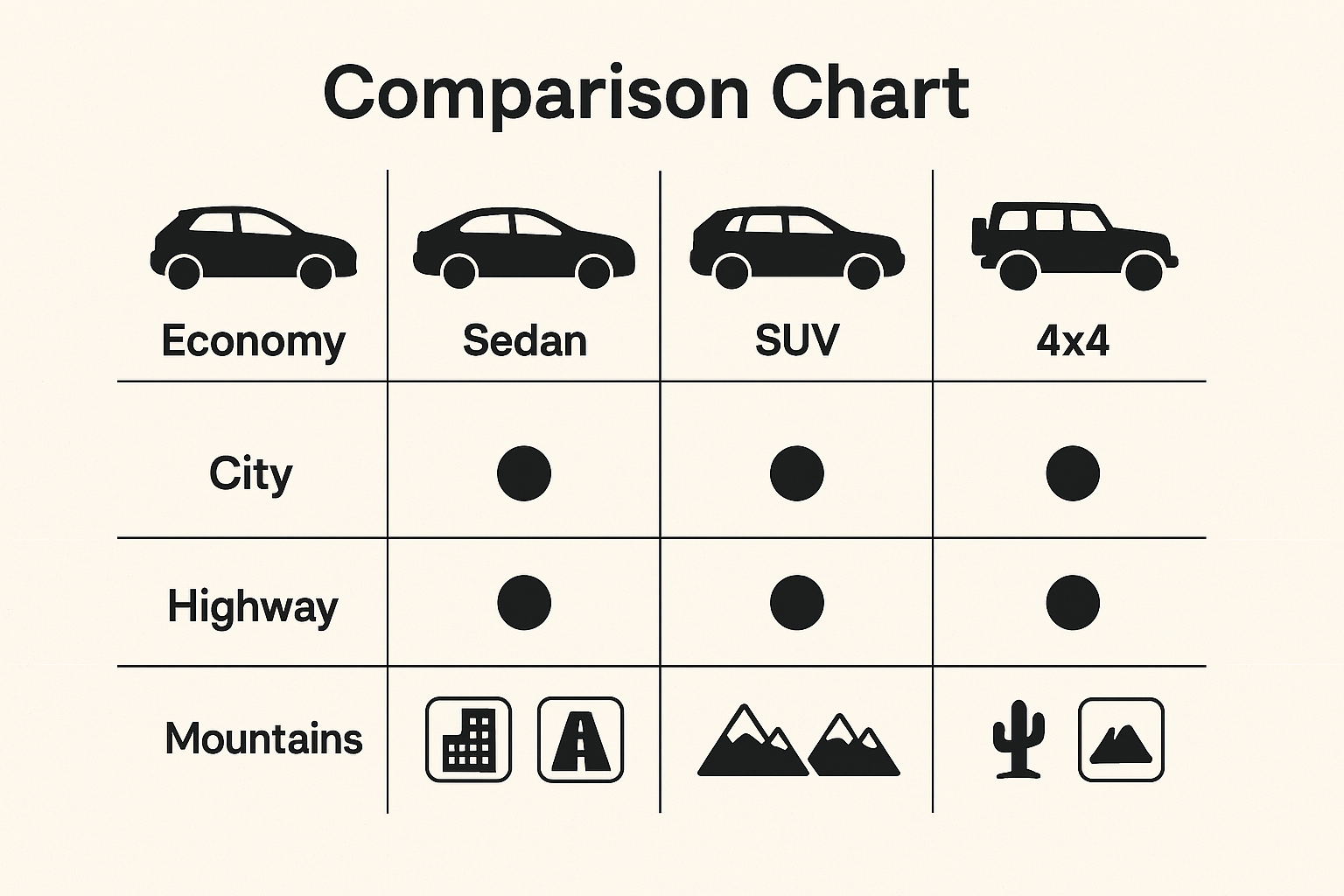
What a 4×4 rental actually costs versus an SUV
Expect to pay noticeably more for a true 4×4 (think Toyota Land Cruiser, Jeep Wrangler, or similar) than for a two-wheel-drive SUV like a Dacia Duster or a Hyundai Tucson. The gap is real, often an extra 300 to 600 MAD per day depending on the model and season. Insurance on 4×4 vehicles also tends to carry a higher excess, because off-road damage claims are messier to assess than a dented bumper in a parking lot.
If your route is 90 percent paved road and 10 percent sand, it’s often cheaper and just as practical to rent a standard SUV, drive it to the edge of the dunes, and hire a local guide with his own 4×4 for the final stretch. We can help you work out which split makes sense once you tell us the actual stops on your itinerary, not just the region.
Manual or automatic, and what else to check before you sign
Most 4x4s available for rent in Morocco are manual transmission. Automatic 4x4s exist but the fleet is smaller and you should book well ahead, especially in October and November when the weather is best for desert trips. Before you sign anything, check three things specifically: the spare tire is a proper spare and not a thin space-saver, there’s a functioning jack and tow strap in the vehicle, and the insurance paperwork actually covers off-road use. Some standard rental contracts in Morocco exclude damage sustained off paved roads entirely, which defeats the purpose of renting a 4×4 in the first place.
Tire pressure is worth asking about too. For sand, agencies that know what they’re doing will tell you to drop pressure before driving on dunes and bring it back up for the highway. If the person handing you the keys can’t answer a basic question about this, that’s a sign to look elsewhere.
Routes where this actually matters
The Sahara starts to feel real once you’re past Zagora or Merzouga, and that’s really where the 4×4 question becomes practical rather than theoretical. If you’re building a loop around it, our Marrakech to Atlas Mountains road trip guide and the seven road trip routes across Morocco both break down which legs need a 4×4 and which don’t.
For most travelers doing a standard Marrakech, Atlas, desert loop, we’d suggest renting a capable SUV from our Marrakech fleet for the bulk of the trip and arranging a local 4×4 guide only for the sand sections. Tell us your exact stops when you book through our vehicle listing and we’ll tell you honestly whether you need the full 4×4 upgrade or not, rather than selling you one you don’t.