
Is It Safe to Rent a Car in Morocco? The Ultimate 2026 Safety Guide
Renting a car in Morocco is safe for tourists with proper preparation and awareness. Over 3 million international visitors drive Morocco annually without incident. Key safety considerations include: choosing reputable rental companies with transparent contracts, understanding comprehensive insurance (€8-€25/day eliminates deductibles), mastering defensive driving for Morocco’s assertive traffic culture, avoiding rural night driving, using guarded parking in cities (€2-€5/night), carrying all documents at police checkpoints, staying alert for livestock and pedestrians, and maintaining your vehicle properly. Morocco’s 1,800 km of modern highways are excellent, while secondary roads require caution. Women traveling solo face minimal driving-specific risks beyond occasional verbal harassment (easily ignored). Vehicle theft is rare with basic precautions. Road accidents occur primarily from speed, livestock collisions, and night driving—all preventable with awareness. This guide covers rental company scams, insurance traps, driving hazards, emergency procedures, solo travel safety, and practical tips for worry-free Morocco road trips in 2026.
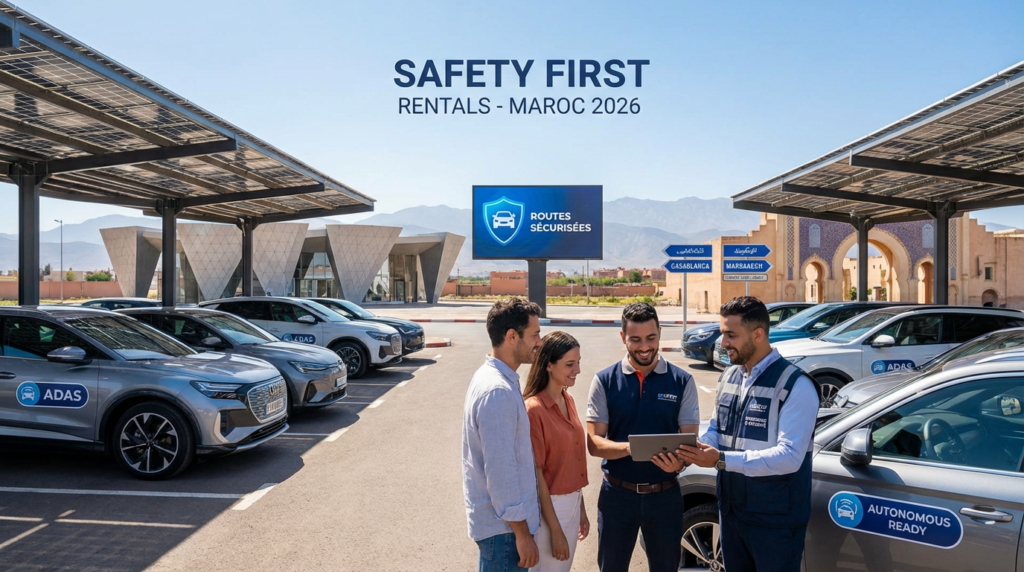
Introduction: Understanding Safety Concerns About Renting a Car in Morocco
“Is it safe to rent a car in Morocco?” ranks among the most common questions from travelers planning independent road trips through this North African kingdom. The concern is understandable—Morocco presents cultural differences, language barriers, unfamiliar traffic patterns, and occasional sensationalized media reports that create anxiety for first-time visitors. However, the reality is far more reassuring than many travelers expect.
Morocco has invested billions in modernizing its infrastructure over the past two decades, creating one of Africa’s most advanced road networks with over 1,800 kilometers of European-standard toll highways, clearly marked national roads, and improving rural routes. The country’s tourism industry serves approximately 13 million international visitors annually, with millions choosing self-drive experiences through the Atlas Mountains, Sahara Desert, and coastal regions without significant safety incidents.
The key to safe car rental in Morocco isn’t avoiding the experience—it’s understanding the specific risks, knowing how to mitigate them, and preparing appropriately. This comprehensive safety guide examines every aspect of car rental safety in Morocco: from choosing trustworthy rental companies and understanding insurance to navigating traffic culture, avoiding scams, handling emergencies, and addressing concerns for solo travelers (especially women). We’ll separate genuine risks requiring caution from exaggerated fears that shouldn’t prevent you from experiencing Morocco’s extraordinary landscapes independently.
Whether you’re concerned about road conditions, traffic accidents, rental company reliability, vehicle theft, police interactions, or solo travel safety, this guide provides evidence-based answers, practical strategies, and honest assessments to help you make informed decisions about renting a car in Morocco.
Rental Company Safety: Choosing Reliable Operators
The foundation of safe car rental in Morocco begins before you arrive—with selecting a reputable company that maintains vehicles properly, provides transparent contracts, offers genuine insurance, and delivers reliable support when needed.
Red Flags Indicating Unreliable Companies
Suspiciously Low Prices: Companies advertising €7-€12/day rates (40-60% below market average of €15-€25/day for economy cars) almost always compensate through hidden fees, mandatory insurance upsells at pickup, aggressive damage claims for pre-existing issues, or poorly maintained vehicles. While attractive initially, these operators create the highest risk for safety problems and financial disputes.
Poor Online Reviews: Check multiple platforms—Google Reviews, Trustpilot, TripAdvisor—for patterns. Warning signs include:
- Consistent complaints about hidden fees and pressure tactics
- Reports of being charged for pre-existing damage
- Mentions of poor vehicle condition (mechanical issues, bald tires, malfunctioning lights)
- Inaccessible customer service during rental period
- Aggressive debt collection for disputed charges
Vague Insurance Terms: Reputable companies clearly explain coverage, deductibles, exclusions, and optional upgrades in writing during booking. Red flags include:
- Refusing to provide written insurance details before pickup
- Claiming “full insurance included” without specifying deductible amounts
- Pressure to purchase unclear “extra protection packages” at counter
- Staff unable to explain exactly what’s covered vs. excluded
No Physical Office/Unknown Location: Companies operating solely online without verifiable physical offices in Morocco pose risks. Legitimate operators have established locations, visible signage, professional facilities, and staff who can be contacted during your rental.
Cash-Only Transactions: While some smaller operators accept cash, requiring cash-only payments (especially for deposits) suggests informal operations lacking proper insurance, licensing, or accountability. Reputable companies accept major credit cards and provide official receipts.
Green Flags Indicating Reliable Companies
Transparent All-Inclusive Pricing: Professional operators like Marralux provide complete cost breakdowns during booking—base rate, insurance options with specific deductibles, any additional fees (airport delivery, young driver, etc.)—so the final pickup price matches expectations exactly.
Modern, Well-Maintained Fleet: Check company websites and reviews for fleet age. Vehicles under 3-5 years old with regular maintenance (documented service records) indicate serious operations prioritizing safety and reliability.
Clear Communication: Responsive companies answer pre-booking questions thoroughly via email, phone, or WhatsApp within 24 hours. They provide detailed pickup instructions, emergency contact numbers, and anticipate common concerns proactively.
Professional Contracts: Written agreements in your language (English, French, Spanish for European tourists) that clearly specify:
- Rental period, pickup/return locations and times
- Total cost breakdown with no “TBA” (to be advised) charges
- Insurance coverage with exact deductible amounts
- Vehicle condition documentation process
- Emergency procedures and contact information
- Fuel policy and mileage limits (if any)
Positive Customer Testimonials: Consistent 4-5 star ratings across platforms with specific praise for transparency, vehicle condition, airport delivery reliability, responsive support, and fair damage assessment processes.
Established Local Presence: Companies operating in Morocco for 5+ years with physical offices, local phone numbers, and established relationships with hotels/riads demonstrate stability and accountability.
International Brands vs. Local Operators: Safety Comparison
International Brands (Hertz, Sixt, Avis, Europcar):
- Safety Advantages: Newest fleets (1-2 years average), rigorous maintenance schedules, standardized processes, international accountability, comprehensive insurance clarity, 24/7 roadside assistance networks
- Drawbacks: Premium pricing (30-50% above local operators), less flexibility, potential language barriers with global call centers
- Best For: First-time Morocco visitors prioritizing maximum predictability over cost
Reputable Local Premium Operators (Marralux, MLB Rent a Car):
- Safety Advantages: Competitive pricing (20-30% below international brands), newer fleets (under 3 years), personalized service, local expertise, direct communication (WhatsApp support), tourist-focused operations understanding foreign visitor needs
- Drawbacks: Less brand recognition internationally (though established locally)
- Best For: Experienced international travelers seeking quality service at fair prices with personal attention
Budget Local Operators:
- Safety Risks: Older vehicles (5-10+ years), inconsistent maintenance, unclear insurance, potential hidden fees, aggressive damage claims, limited support
- When Acceptable: Only if thoroughly vetted through recent reviews, transparent pricing confirmed in writing, and realistic expectations about vehicle condition
- Best Avoided: Unless you’re highly experienced with Morocco and comfortable managing potential issues independently
Recommendation: For safety-focused travelers, either international brands or established local premium operators (like Marralux) provide optimal risk mitigation. The 15-25% price difference between these tiers represents worthwhile insurance against mechanical failures, unclear contracts, and support gaps during your trip.
For comprehensive guidance on choosing rental companies, see our detailed Rent a Car in Morocco: 15 Essential Things to Know guide.
Insurance Safety: Protecting Yourself Financially and Legally
Insurance represents your primary safety net when renting a car in Morocco—not just for legal compliance, but for financial protection against accidents, damage, theft, and disputes. Understanding coverage options and choosing appropriately is critical for safe, worry-free driving.
Mandatory Basic Coverage (Always Included)
Third-Party Liability (TPL): Legally required in Morocco, covers damage you cause to other vehicles, property, or people. This is included in all legitimate rental rates and non-negotiable. Coverage typically includes €1,000,000+ for injury/death and €500,000+ for property damage.
Basic Collision Damage Waiver (CDW): Reduces your financial responsibility for damage to the rental vehicle, but includes a significant deductible/excess (€500-€1,200 depending on vehicle category). This means if you damage the car, you pay the deductible amount out of pocket, and insurance covers additional costs beyond that.
The Deductible Risk
With basic CDW, minor incidents create substantial financial exposure:
- Scratch on parking pillar: €400 repair → You pay €400
- Side mirror broken by tight street: €300 replacement → You pay €300
- Fender dent from another vehicle: €800 repair → You pay €800 (full deductible)
- Major collision: €4,000 damage → You pay €800 deductible, insurance pays €3,200
Morocco’s driving conditions—narrow medina streets, aggressive traffic, livestock on roads, challenging mountain passes—create realistic risk of minor damage even for careful drivers. The basic CDW deductible represents significant unexpected expense.
Full Coverage Insurance (Super CDW): Worth It?
Full coverage (also called Super CDW, Full Protection, or Zero Excess) reduces or eliminates the CDW deductible entirely.
Cost: €8-€25 per day (€56-€175 for 7 days)
What It Covers: Reduces collision damage deductible from €500-€1,200 down to €0-€100, meaning you pay nothing or minimal amounts for covered damage to the rental vehicle.
Safety Value Analysis:
For a 7-day rental, full coverage costs €105-€175. Consider:
- Breakeven Point: Just one minor incident (scratch, dent, broken mirror) costing €400-€800 to repair exceeds the insurance cost, making it financially beneficial
- Peace of Mind: Drive confidently through tight medina streets, mountain passes, and busy markets without constant anxiety about minor damage
- Focus on Experience: Spend mental energy enjoying Morocco’s landscapes instead of obsessively parking far from obstacles and avoiding challenging but rewarding routes
When Full Coverage Makes Sense:
- First-time Morocco visitors unfamiliar with driving culture
- Driving through Atlas Mountains or into Sahara (rough roads, unpaved sections)
- Navigating imperial city medinas (Marrakech, Fes—extremely tight streets)
- Renting premium/luxury vehicles (higher repair costs)
- Peace of mind is worth €15-€25/day to you
- Your credit card insurance doesn’t cover Morocco (most don’t)
When Basic Coverage May Suffice:
- Highly experienced international drivers comfortable with challenging conditions
- Primarily highway and major city driving (avoiding tight medinas)
- Comfortable risking €500-€1,200 potential expense
- Verified comprehensive travel insurance covering rental car excess
What’s NEVER Covered (Critical Awareness)
Even with full coverage insurance, certain damage and situations void coverage entirely:
Excluded Damage Types:
- Tire/Wheel Damage: Punctures, sidewall tears, rim damage (separate coverage available €3-€8/day)
- Undercarriage Damage: Rocks, speed bumps, rough roads damaging underside
- Interior Damage: Stains, tears, burns, broken components inside vehicle
- Windscreen/Glass: Chips, cracks (separate coverage available €3-€8/day)
- Lost Keys: Replacement costs (often €200-€500)
Situations Voiding All Coverage:
- Driving under influence of alcohol or drugs (zero tolerance in Morocco)
- Unauthorized drivers (only named drivers on contract covered)
- Off-road driving beyond vehicle capability (taking sedan on 4×4-only trails)
- Cross-border travel without written permission
- Illegal activities or reckless driving
Personal Belongings: Never covered—items stolen from vehicle require separate travel insurance
Credit Card Insurance: Why It’s Insufficient for Morocco
Many premium credit cards (Chase Sapphire Reserve, American Express Platinum, World Elite Mastercard) advertise car rental insurance as a benefit. However, these policies are almost always inadequate for Morocco:
Geographic Exclusions: Many credit card policies explicitly exclude Morocco, Africa, or list only “approved countries” (primarily Western Europe, North America, Australia).
Secondary Coverage: Credit card insurance is typically secondary, meaning it only pays after your primary insurance (the rental company’s CDW) is exhausted. You must pay the deductible upfront, file claims with both insurers, and wait weeks or months for reimbursement.
Reimbursement Model: You pay all costs immediately (rental company charges your credit card deposit), then submit documentation to credit card company for potential reimbursement. If your claim is denied (common), you have no recourse.
Documentation Burden: Claims require police reports (in Arabic/French), detailed rental company damage assessments, repair invoices, photos—all while you’re traveling or already home.
Verification Difficulty: Rental companies in Morocco don’t recognize credit card insurance and require full deposits regardless of your credit card coverage claims.
Recommendation: Treat credit card insurance as backup protection only, not primary coverage. Purchase full coverage directly from rental company for immediate, hassle-free protection.
For comprehensive insurance guidance, see our detailed Insurance for Car Rental in Morocco Complete Guide.
Road Safety: Understanding Morocco’s Driving Environment
Morocco’s road network spans 57,000 km of paved roads including 1,800 km of modern highways, but road safety requires understanding diverse conditions, driving culture, and specific hazards.
Highway Safety (Autoroutes)
Morocco’s toll highways rank among Africa’s best and compare favorably to European motorways:
Safety Features:
- Smooth asphalt, well-maintained surfaces
- Multiple lanes (typically 2-3 each direction)
- Clear signage in Arabic, French, and international symbols
- Regular rest areas with facilities
- Emergency phones every 2 km
- 120 km/h speed limit (110 km/h in some sections)
Remaining Hazards:
- Aggressive Overtaking: Drivers pass on curves and hills; maintain right lane except when overtaking
- Variable Speed Enforcement: Speed cameras common but inconsistently enforced; locals often exceed limits
- Toll Booth Confusion: Multiple lanes with cash/card/automatic options; follow signs carefully
- Sudden Lane Changes: Use mirrors constantly; vehicles change lanes with minimal signaling
Safety Rating: 8/10 – Excellent infrastructure with cultural driving differences requiring defensive awareness
National Roads (Routes Nationales)
Primary roads connecting cities and regions, quality varies significantly:
Well-Maintained Routes (N1, N8, N9, N13):
- Two lanes each direction on major segments
- Good surface quality
- Moderate traffic
- Safety Rating: 7/10
Secondary National Roads:
- Single lane each direction
- Variable surface condition (some potholes, rough patches)
- Narrow in sections
- Occasional unmarked obstacles
- Safety Rating: 6/10
Mountain Routes (Tizi n’Tichka, Tizi n’Test):
- Spectacular scenery but demanding driving
- Winding roads with hairpin curves
- Steep grades and sheer drop-offs
- Occasional rockfalls
- Tour buses and heavy trucks navigating tight spaces
- Safety Rating: 5/10 (requires full attention, experience with mountain driving helpful)
Regional & Rural Roads
Connecting smaller towns and villages, conditions range widely:
Paved Provincial Roads:
- Often narrow (barely two vehicles passing)
- Potholes common, especially after winter rains
- Minimal signage
- Livestock, pedestrians, motorcycles share road
- Safety Rating: 4-5/10
Unpaved Tracks (Pistes):
- Graded gravel to rough rocky surfaces
- Require SUV/4×4
- Remote with limited assistance if breakdowns occur
- Flash flood risk in rainy season
- Safety Rating: 3-4/10 (adventurous drivers with appropriate vehicles only)
Specific Road Hazards Requiring Constant Vigilance
Livestock on Roads (Critical Risk): Donkeys, sheep, goats, camels, and cattle wander freely on all road types including highways. Animals are unpredictable—they may suddenly cross, stop in lanes, or panic at approaching vehicles. This represents the single most common cause of serious accidents involving tourists.
Safety Strategy:
- Reduce speed when livestock visible (even distant)
- Assume animals will move unpredictably
- Never swerve dramatically (risk rolling vehicle); brake firmly instead
- Night driving amplifies risk exponentially (livestock invisible until too close)
Pedestrians Everywhere: Moroccans walk along and across roads of all types, including highways. Expect pedestrians:
- Walking in traffic lanes (especially rural areas with no shoulders)
- Crossing anywhere without looking
- Dressed in dark clothing at night (invisible)
- Children playing near roadways
Safety Strategy:
- Scan roadsides constantly
- Slow for pedestrian clusters (villages, markets, schools)
- Assume pedestrians won’t yield right-of-way
- Use horn as warning when passing pedestrians
Unmarked Speed Bumps (Ralentisseurs): Morocco uses speed bumps extensively in villages and urban areas, but many are poorly marked or completely unmarked. Hitting one at speed damages suspension and can cause loss of control.
Safety Strategy:
- Reduce speed approaching any developed area
- Watch for faded yellow/white markings on pavement
- Follow local vehicles (they know bump locations)
- Assume villages have speed bumps even if unseen
Potholes: Common on regional roads, ranging from minor surface defects to wheel-breaking craters. Rainy season (November-March) worsens conditions.
Safety Strategy:
- Reduce speed on any road showing surface deterioration
- Scan ahead for holes, especially after vehicles ahead swerve
- Slow significantly for unknown road segments
- Avoid puddles (may conceal deep potholes)
Motorcycles & Scooters: Ubiquitous in cities, motorcycles weave through traffic, appear in blind spots, rarely signal, and often carry entire families (2-4 people per motorcycle).
Safety Strategy:
- Check mirrors before every lane change
- Shoulder-check blind spots
- Expect motorcycles to squeeze through gaps
- Allow extra following distance (motorcycles brake unpredictably)
Donkey Carts & Slow Vehicles: Rural roads include animal-drawn carts, overloaded trucks climbing hills at 15-20 km/h, and agricultural vehicles.
Safety Strategy:
- Patience—pass only when visibility is excellent and road is straight
- Use horn before overtaking to alert cart drivers
- Allow massive following distance (carts lack brake lights)
For comprehensive road condition guidance, see our Driving in Morocco: Complete 2026 Guide to Rules, Safety & Road Conditions.
Morocco’s driving culture differs significantly from Western Europe and North America. Understanding and adapting to these cultural norms is essential for safety.
Assertive (Not Aggressive) Driving Style
Moroccan drivers operate with an assertive, adaptive style that initially appears chaotic but follows unwritten rules and mutual understanding:
Lane Discipline: Lanes are suggestions more than strict guidelines. Drivers use available space creatively, especially in congested areas. Three marked lanes often become four or five actual lanes of traffic.
Signaling: Turn signals are used less consistently than in Western countries. Drivers often change lanes or turn without signaling, or signal simultaneously while executing the maneuver rather than in advance.
Honking: Horn use is constant and communicative, not aggressive:
- Quick beep: “I’m here” (alerting others to your presence)
- Two beeps: “I’m passing you”
- Long honk: Warning of danger or frustration
- Friendly honks: Greetings between acquaintances
Following Distance: Moroccan drivers maintain shorter following distances than Western standards. Don’t interpret this as aggression; it’s normal spacing. Maintain your safe following distance (3-4 second rule) regardless of pressure to close gaps.
Roundabout Navigation: Priority rules at roundabouts are theoretically “yield to vehicles already in roundabout,” but practice is far more fluid. Success requires confidence and decisiveness:
- Enter Assertively: Waiting for perfect gaps means waiting indefinitely
- Make Eye Contact: Gauge other drivers’ intentions through eye contact and body language
- Claim Space: Once you enter, commit; hesitation creates confusion
- Be Prepared to Yield: If another vehicle enters more assertively, yield gracefully
Overtaking: Vehicles overtake on blind curves, hills, and seemingly impossible situations. What looks reckless often reflects intimate knowledge of specific road conditions. Never try to match local overtaking maneuvers until you know roads intimately.
Defensive Driving Strategies for Morocco
Stay Right, Pass Left: Maintain right lane except when overtaking. Moroccan drivers expect this pattern and become confused when tourists cruise in left lanes.
Constant Mirror Awareness: Check mirrors every 5-10 seconds. Vehicles, especially motorcycles, appear quickly in blind spots.
Expect the Unexpected: Mentally rehearse responses to sudden obstacles:
- Vehicle stopped in lane ahead → Brake and check mirrors before changing lanes
- Livestock stepping into road → Firm braking, avoid swerving
- Motorcycle appearing alongside → Maintain lane, allow them space
- Oncoming vehicle in your lane → Brake, move right, honk warning
Drive Predictably: In an environment where many drivers operate flexibly, being predictable makes you safer. Signal early and clearly, maintain consistent speed, move deliberately.
Use Your Horn: Adapt to Moroccan horn culture:
- Approaching blind curves on mountain roads: Honk warning
- Passing slower vehicles: Quick honk to alert
- Pedestrians/livestock on roadside: Gentle honk as you approach
- Potential collision: Loud, sustained honk
Adjust Speed to Conditions: Legal speed limits are often ignored, but wise drivers adjust speed to actual conditions (visibility, traffic density, road surface, hazards) rather than following speed limit signs or other drivers’ pace.
Avoid Night Driving (Rural Areas): Night driving amplifies every hazard exponentially:
- Livestock invisible on dark roads
- Pedestrians in dark clothing walking in lanes
- Potholes and speed bumps unmarked
- Vehicles with broken/missing lights
- Limited roadside assistance if breakdowns occur
- Fatigue impairs judgment and reaction time
Night Driving Safety Rule: Restrict night driving to well-lit urban areas and major highways with street lighting. Never drive rural routes or mountain roads after dark.
Vehicle Safety: Inspection and Maintenance
Vehicle condition directly affects your safety. Thorough inspection at pickup and basic maintenance awareness prevent dangerous situations.
Pre-Rental Pickup Inspection (Critical)
Complete Exterior Walk-Around (With Rental Staff):
Document every defect, scratch, dent, and imperfection. This protects you from false damage claims AND identifies safety issues:
- Body Damage: Note scratches, dents, rust, panel misalignment
- Tires: Check tread depth (legal minimum 1.6mm, but 3mm+ ideal for safety), sidewall condition (no cracks, bulges), tire pressure (test with thumb if gauge unavailable), spare tire condition
- Glass: Document windscreen chips/cracks (even tiny ones expand), all window condition, mirror integrity
- Lights: Test headlights (low/high beam), brake lights, turn signals, hazard lights, fog lights—ensure all functional
- Wipers: Test operation, check blade condition (torn blades reduce visibility in rain)
Take Comprehensive Photos/Video:
Use your smartphone to photograph:
- All four corners of vehicle from multiple angles
- Close-ups of any damage
- Odometer reading
- Fuel gauge showing full tank
- All four tires showing tread
- Interior condition
Interior Safety Check:
- Seat Adjustments: Ensure driver seat adjusts properly for comfortable, safe driving position
- Seat Belts: Test all belts—they should latch securely and retract smoothly
- Mirrors: Adjust all mirrors; they should hold position
- Horn: Test function (critical safety device in Morocco)
- Dashboard Warning Lights: Start engine and check no warning lights remain illuminated (check engine, oil, ABS, airbag)
- Climate Control: Test heating/AC (prevents dangerous fatigue in extreme temperatures)
- Door Locks: Ensure all doors lock/unlock properly (security when parked)
Documents Verification:
Confirm presence in glove compartment:
- Vehicle registration
- Insurance certificate (green card)
- Rental agreement
- Emergency contact numbers
- Spare tire jack and wrench (if trunk-mounted spare)
- Warning triangle (legally required)
- Safety vest (legally required)
Red Flags Requiring Attention/Refusal:
- Bald tires (visible wear indicators, smooth tread)
- Non-functional lights (especially brake lights, headlights)
- Windscreen cracks obstructing driver vision
- Check engine/warning lights illuminated
- Fluid leaks under vehicle (oil, coolant, brake fluid)
- Strange noises when starting engine
- Brakes feeling soft or requiring excessive pedal pressure
If Safety Issues Identified: Politely but firmly request a different vehicle. Reputable companies like Marralux replace vehicles with safety concerns immediately without argument. Companies that pressure you to accept unsafe vehicles demonstrate why they shouldn’t be your rental choice.
Basic Maintenance Awareness During Rental
Daily Quick Checks (30 Seconds):
Walk around vehicle before each day’s driving:
- Look under vehicle for fluid leaks
- Visual tire inspection (any appear low?)
- Check for new damage (parking scrapes, etc.)
Monitor Dashboard While Driving:
- Temperature gauge: Should stay in normal range (middle of gauge); climbing toward hot indicates cooling system problem—pull over safely and call rental company
- Oil pressure light: Should never illuminate while driving; if it does, stop engine immediately and call for assistance
- Unusual warning lights: Any new lights require investigation
Listen for Unusual Sounds:
- Grinding when braking: Worn brake pads (safe to drive to rental office but address promptly)
- Thumping/wobbling: Possible tire issue or wheel balance (pull over, inspect tires)
- Squealing from engine: Belt issues (can continue driving but alert rental company)
- Loud exhaust: Exhaust system damage (safe to drive but annoying)
Fluid Level Awareness (Weekly for Long Rentals):
If renting 7+ days, basic fluid level checks provide safety:
- Engine Oil: Check with dipstick when engine cold (morning), oil should be between MIN and MAX marks
- Coolant: Reservoir visible in most cars, should be at “full” mark when cold
- Brake Fluid: Small reservoir near firewall, should be at MAX line
- Washer Fluid: Vital in Morocco for dusty conditions; refill at gas stations if low
Most rental companies handle maintenance, but awareness helps you identify problems before they become dangerous.
Theft and Security: Protecting Your Vehicle and Belongings
Vehicle theft in Morocco is relatively rare, especially for rental cars (trackers and insurance discourage theft), but opportunistic break-ins targeting tourist belongings occur. Smart security practices eliminate most risks.
Vehicle Theft Risk (Low)
Statistics: Morocco has lower vehicle theft rates than many European countries. Rental vehicles are particularly unattractive to thieves due to GPS tracking, complex insurance, and difficulty reselling.
High-Risk Locations:
- Unguarded street parking in major cities overnight
- Remote areas with no surveillance (desert, isolated mountain stops)
- Outside nightclubs/bars late at night
Prevention:
- Use guarded parking (parking gardé) in cities (€2-€5/night)
- Park in hotel/riad secured lots or arranged parking
- Never leave vehicle in isolated areas overnight
- Lock all doors and close windows completely
- Engage steering wheel lock if provided
If Theft Occurs:
- Call rental company immediately (24/7 emergency number)
- File police report (commissariat de police)—required for insurance
- Obtain written police report (constat de vol)
- Follow rental company’s theft procedure
- Contact your travel insurance provider
Belongings Theft Risk (Moderate to High)
Vehicle break-ins targeting visible valuables are more common than vehicle theft:
High-Risk Scenarios:
- Valuables visible in parked car (cameras, bags, electronics)
- Parking outside tourist attractions, restaurants, beaches
- Quick stops in medinas or crowded areas
- Overnight street parking
Prevention (100% Effective):
- Never Leave Valuables in Vehicle: Take everything valuable with you always
- Nothing Visible: Even empty bags or charging cables signal potential valuables
- Trunk Use: Place items in trunk BEFORE arriving at destination (watching eyes note trunk access)
- Documents: Never leave passport, wallet, or rental documents in vehicle
- Obvious Tourist Items: Guidebooks, maps visible signal tourist car (target)
Secure Parking Strategy:
- Use hotel/riad locked garages whenever available (often free for guests)
- Guarded parking lots (parking gardé): Small fee (€2-€5/night) provides attendant surveillance
- In medinas: Park in official parking areas, never on streets
- Beaches/natural attractions: Park in paid supervised lots, not isolated roadside
If Break-In Occurs:
- Document damage with photos
- File police report (required for insurance claims)
- Notify rental company (they handle vehicle damage)
- Contact travel insurance for stolen belongings (rental insurance never covers personal items)
- Cancel credit cards if wallet stolen
- Contact embassy if passport stolen
Women Travelers: Solo Security Considerations
Vehicle-Specific Risks (Minimal): Driving as a solo woman poses no additional theft or safety risks beyond those faced by any tourist. Morocco is generally safe for women driving independently.
Harassment (Verbal, Rare Physical):
- Occasional catcalls or comments from men (especially in cities)
- Usually verbal only; physical harassment is rare
- More common walking in medinas than while driving
Safety Strategies:
- Confident Demeanor: Project confidence; harassers target perceived vulnerability
- Ignore Completely: Don’t engage, make eye contact, or respond to comments
- Modest Dress: Shoulders and knees covered (especially rural areas) reduces unwanted attention
- Join Other Tourists: In crowded areas (medinas, markets), walk near other tourist groups
- Riads Over Hotels: Stay in riads (intimate guesthouses) where staff know you by name and provide personalized attention
- Evening Caution: Avoid walking alone after dark in unfamiliar areas; take taxis (petit taxis cheap and safe)
Driving Advantages for Solo Women:
- Vehicle provides protected, private space
- Control over when/where you stop
- Easy escape from uncomfortable situations
- Independence from group tour dynamics
Resources:
- Morocco Unveiled Women’s Travel Guide: Solo Women Travel Morocco
- UK Government Travel Advice (Women): Morocco Safety and Security
For comprehensive solo travel guidance, many women travel bloggers document Morocco experiences—search “solo woman Morocco car rental” for current firsthand accounts.
Emergency Procedures: Handling Problems Safely
Despite best precautions, emergencies occasionally occur. Knowing proper procedures ensures safe, efficient resolution.
Vehicle Breakdown
Immediate Actions:
- Pull Over Safely: Move to roadside shoulder (if available), exit travel lanes completely, activate hazard lights
- Warning Triangle: Place warning triangle 50-100m behind vehicle (legally required, prevents rear-end collisions)
- Safety Position: All occupants exit vehicle and stand behind guardrail or well off roadway (oncoming traffic poses greater risk than leaving vehicle)
- Call Rental Company: Use 24/7 emergency number provided in rental documents
Information to Provide:
- Your location (nearest city/town, highway marker number, GPS coordinates if available)
- Problem description (engine overheating, flat tire, won’t start, strange noises)
- Rental agreement number
- Contact phone number
Assistance Timeline:
- Urban areas: 30-60 minutes typically
- Rural highways: 1-2 hours
- Remote areas: 2-4+ hours
While Waiting:
- Stay visible but safe (off roadway)
- Don’t accept rides from strangers (except marked taxis if stranded)
- Keep water and snacks accessible
- Remain with vehicle (rental company needs to see issue)
Flat Tire Specific:
- Many rentals include spare tire and jack
- If comfortable changing tire yourself, proceed carefully
- Position jack on solid ground, use parking brake, loosen nuts before jacking, tighten in star pattern
- If uncomfortable, wait for roadside assistance (safer than improper jack use)
Traffic Accidents
Immediate Response (Critical Legal Steps):
- Stop Immediately: Leaving accident scene is illegal in Morocco, even minor incidents
- Check for Injuries: Assess all parties involved; call 15 (ambulance) if any injuries
- Call Police (19): Required for all accidents except very minor (tiny scratch) by mutual agreement
- Document Scene: Photos of all vehicles, damage, positions, street signs, license plates
- Obtain Constat Amiable: Police-issued accident report (both drivers sign); this is mandatory for insurance claims
- Exchange Information: Driver names, license numbers, insurance details, witness contact info
- Call Rental Company: Notify within 24 hours (often required within 2 hours by contract terms)
What NOT To Do:
- Never admit fault or sign documents you don’t understand
- Don’t agree to “handle it privately” without police report (you’ll be liable for all costs)
- Don’t move vehicles before police arrive (unless blocking traffic and instructed to move)
- Don’t leave scene before police clearance
- Don’t argue or become confrontational (stress is high; escalation helps no one)
Insurance Process:
- Police report (constat amiable) required for all claims
- Rental company files claim with insurance
- With basic coverage: Deductible charged to your credit card deposit
- With full coverage: Zero or minimal out-of-pocket cost
- Process takes 7-30 days typically
If Other Party at Fault:
- Still obtain police report
- Their insurance should cover your damages
- Rental company handles inter-insurance communication
- You’re still responsible for rental costs during repair period (loss-of-use charges possible)
Police Checkpoints (Common, Usually Brief)
Purpose: Police checkpoints are routine throughout Morocco—verifying documents, checking for wanted individuals, monitoring compliance.
What to Expect:
- Officer waves you through OR signals to stop
- Request to see driver’s license, IDP, passport, rental agreement
- Brief questions: Where traveling from/to? How long in Morocco?
- Inspection (rare): May ask to open trunk, check vehicle papers
Required Documents (Always Carry):
- Driver’s license (original)
- International Driving Permit
- Passport or EU national ID
- Rental agreement showing you’re authorized driver
- Vehicle registration (usually in glove compartment)
- Insurance certificate (green card, with vehicle papers)
Proper Behavior:
- Be polite, patient, cooperative
- Answer questions honestly and directly
- Don’t volunteer extra information
- Smile, make eye contact, basic French helps (“Bonjour,” “Merci”)
- Never offer bribes (illegal; modern Morocco largely corruption-free at police level)
If You’re Missing Documents:
- Explain politely (“I’m a tourist, I didn’t realize…”)
- Usually results in warning for tourists
- Possible fine: €20-€50 typically (request written receipt)
- Rarely escalates unless multiple violations or confrontational attitude
Language Barrier:
- Most checkpoint police speak French; fewer speak English
- Simple phrases: “Touriste” (tourist), “Je ne comprends pas” (I don’t understand)
- Showing documents speaks universally
- Smartphone translation apps help if needed
Medical Emergencies
Emergency Numbers:
- 15: Ambulance (SAMU)
- 150: Police emergency
- 19: Traffic police
Private Hospitals (Cities):
Private clinics offer higher standards than public hospitals, accept travel insurance:
- Marrakech: Polyclinique du Sud, Clinique Al Majd
- Casablanca: Clinique Benyamina, Clinique Internationale du Parc
- Fes: Clinique Zine
- Rabat: Clinique Agdal
Travel Insurance: Always carry travel insurance with medical coverage. Morocco’s healthcare is good in cities but expensive for foreigners. Insurance covers:
- Hospital treatment
- Doctor consultations
- Prescription medications
- Emergency medical evacuation if necessary
Embassy Contact: Know your embassy location and contact:
- US Embassy Rabat: +212 537-637-200
- UK Embassy Rabat: +212 537-633-333
- Canadian Embassy Rabat: +212 537-687-400
- Australian Embassy (Rabat): +212 537-771-000
- EU Citizens: Contact relevant EU embassy in Rabat
For comprehensive emergency guidance, consult Driving in Morocco: Complete 2026 Guide emergency procedures section.
Common Rental Scams and How to Avoid Them
While most Moroccan rental companies are honest, some operators employ predatory practices. Awareness protects you from financial loss and stress.
Scam 1: Hidden Fee Ambush at Pickup
How It Works: Company advertises extremely low rate (€8-€12/day). Upon arrival, they declare:
- “Insurance not included, mandatory €20/day”
- “Airport pickup fee €40” (not mentioned in booking)
- “Young driver surcharge €15/day”
- “GPS mandatory for tourists, €8/day”
Suddenly your “€70 week rental” becomes €250+ with no alternative (you’re at airport with no transportation).
Prevention:
- Request itemized total quote in writing before booking
- Confirm: “This total price includes ALL mandatory fees, correct?”
- Screenshot booking confirmation showing total price
- Book with companies offering transparent all-inclusive quotes (like Marralux)
- If ambushed at counter, refuse rental and find alternative (lesson learned for future)
Scam 2: Pre-Existing Damage Blame
How It Works: Upon return, company claims damage you didn’t cause, charging €300-€800 to your credit card for “repairs.” You have no proof the damage wasn’t yours.
Prevention:
- Comprehensive Photo/Video Documentation at Pickup: Photograph every inch of vehicle from multiple angles, close-ups of existing damage, 360° video walk-around
- Timestamp photos (smartphone EXIF data shows date/time)
- Conduct inspection with staff member; have them acknowledge existing damage in writing
- Repeat full photo documentation at return, with staff present
- If staff finds damage you didn’t cause, show pickup photos immediately
If Scammed:
- Dispute charge with credit card (show pickup photos as evidence)
- File complaint with rental company management
- Leave detailed negative review warning others
- Contact consumer protection in company’s country of operation
- Accept that some disputes are unwinnable; prevention is key
Scam 3: Fake “Upgrades” and Upsells
How It Works: Counter staff pressure you into “essential” upgrades you don’t need:
- “This vehicle has problem, must upgrade to larger car for €30/day more”
- “Insurance you booked is inadequate, need our premium package €25/day”
- “GPS mandatory by law €8/day” (false—smartphone maps work fine)
Prevention:
- Confirm your exact booking details before arriving
- Be prepared to decline add-ons firmly: “No thank you, I’ll proceed with my original booking”
- If they claim booked vehicle unavailable, demand free upgrade (industry standard)
- Walk away if pressure is excessive (serious red flag about company ethics)
Scam 4: Fuel Scam
How It Works:
- Version A: Company delivers car with 3/4 tank (not full), claims it’s full. You return full tank, they keep extra fuel value.
- Version B: Require pre-purchase of fuel tank (€80-€100 non-refundable). You can’t possibly return empty, so they profit from unused fuel.
Prevention:
- Photograph fuel gauge at pickup (showing full)
- Confirm full-to-full policy in writing
- Decline pre-purchase fuel offers (never beneficial to customer)
- Fill tank to absolute full before return; keep receipt showing nearby location and recent timestamp
Scam 5: Phantom Charges After Return
How It Works: Days or weeks after return, rental company charges your credit card for:
- “Traffic fines you incurred” (real or fabricated)
- “Late return fee” (you returned on time)
- “Extra cleaning” (vehicle was clean)
- “Toll fees” (already paid)
Prevention:
- Complete thorough final inspection with staff at return
- Obtain written confirmation: vehicle returned in good condition, no additional charges, deposit release timeline
- Photograph vehicle condition, fuel level, odometer at return
- Keep all toll receipts
- Monitor credit card for 30 days after return; dispute unauthorized charges immediately with evidence
Red Flag Companies:
- Patterns of complaints about post-return charges in reviews
- Vague contract terms regarding potential additional fees
- Unwillingness to provide written confirmation at return
Trusted Companies:
Operators like Marralux, international brands (Hertz, Sixt), and well-reviewed local operators (MLB Rent a Car) have established reputations that discourage scamming—negative reviews damage business more than scam profits benefit.
Real Safety Statistics: Putting Risks in Perspective
Anxiety about Morocco car rental safety often exceeds actual risk when examined statistically.
Comparative Context:
Road Fatalities (Per 100,000 Population):
- Morocco: ~19.5 (2023 WHO data)
- France: ~5.0
- Spain: ~3.3
- United Kingdom: ~2.6
- United States: ~12.9
Morocco’s rate is higher than Western Europe but comparable to or better than many U.S. states, Eastern European countries, and significantly safer than many developing nations.
Tourist-Specific Risk:
- Tourists generally drive more cautiously than locals
- Tourists stick to major roads/highways (safest infrastructure)
- Tourist accident rates in Morocco are significantly lower than local population rates
- Most tourist incidents are minor (scrapes, parking damage) not serious accidents
Primary Accident Causes (Morocco):
- Speeding: 40% of fatal accidents (tourists drive slower)
- Livestock Collisions: 15-20% of rural accidents (preventable with caution)
- Night Driving: 25% of fatal accidents occur at night (avoid rural night driving)
- Driver Fatigue: 10-15% contributor (take breaks, share driving)
- Alcohol: 8-10% factor (zero-tolerance law; tourists generally compliant)
Your Risk Reduction:
By following this guide’s recommendations:
- Choose reputable rental companies: Eliminates vehicle condition risks
- Purchase full insurance: Eliminates financial risk from damage
- Avoid rural night driving: Eliminates 25% of accident scenarios
- Drive defensively, watch for livestock: Prevents majority of preventable accidents
- Maintain safe speeds: Removes primary accident cause
Realistic Assessment:
With proper precautions, your risk of serious incident while renting a car in Morocco is extremely low—comparable to or less than many vacation activities (skiing, water sports, motorcycle riding) tourists undertake without hesitation. Millions of tourists complete Morocco road trips annually without incident beyond minor navigation confusion and enjoyable adventure.
Why Marralux Prioritizes Your Safety
At Marralux, we understand that safety concerns prevent many tourists from experiencing Morocco’s extraordinary landscapes independently. We’ve built our entire operation around eliminating the safety risks that justify those concerns.
Fleet Safety Standards:
- All vehicles under 3 years old (well below industry average of 5-7 years)
- Comprehensive pre-rental mechanical inspection: tires, brakes, lights, fluids, safety systems
- Regular professional maintenance at authorized service centers
- GPS tracking in all vehicles (theft prevention, emergency location)
- 24/7 monitoring for maintenance warning indicators
Transparent Insurance:
- Clear explanation of basic coverage (TPL + CDW with deductible amounts specified in writing)
- Optional full coverage (Super CDW) explained without pressure: what it covers, what it costs, what it doesn’t cover
- No mandatory insurance upsells at counter
- Written confirmation of chosen coverage before pickup
Document Verification:
- Pre-pickup checklist ensuring all safety equipment present: spare tire, jack, warning triangle, safety vest, first aid kit
- Vehicle registration, insurance certificates (green card) verified current
- Emergency contact card provided with 24/7 phone numbers (Marralux, police, ambulance, roadside assistance)
Pickup Process Designed for Safety:
- Guided vehicle inspection with staff member documenting pre-existing condition photographically
- Functional test of all safety features: lights, horn, brakes, seat belts
- Route guidance provided based on your destination: safest roads, areas to avoid, driving time estimates
- Genuine answers to safety questions (we want you to return safely, not just rent)
24/7 WhatsApp Support:
- Direct communication with our team anytime: questions, concerns, emergencies
- Real humans respond (not automated bots or overseas call centers)
- Local Morocco knowledge: road conditions, weather alerts, safe parking recommendations
- Roadside assistance dispatched promptly (30-90 minutes urban, 2-3 hours rural typically)
Tourist-Focused Approach:
- We specialize in European tourists—we understand your concerns because we work with travelers like you daily
- Clear communication in English, French, Spanish
- Realistic expectations set during booking (we explain Morocco’s driving culture honestly)
- No pressure tactics, no hidden fees, no surprise charges (your trust is worth more than short-term profit)
Commitment to Improvement:
- Customer feedback actively sought and addressed
- Fleet upgraded annually with newer, safer vehicles
- Staff trained in tourist safety concerns and cultural sensitivity
- Insurance options expanded based on customer needs
For transparent, safety-focused car rental in Morocco, visit Marralux.com for your free all-inclusive quote.
Frequently Asked Questions About Car Rental Safety in Morocco
Is Morocco safe for solo travelers renting a car?
Yes, Morocco is safe for solo travelers of all genders renting cars. Millions of solo tourists explore Morocco independently annually. Vehicle theft is rare, violent crime targeting tourists is extremely rare, and driving presents no additional risks for solo travelers beyond standard caution. Solo women may experience occasional verbal harassment (catcalling) in cities, but this occurs walking in medinas, not while driving. Confident demeanor, modest dress, and ignoring comments resolves most situations. Your vehicle actually provides protected private space and control over when/where you stop. Many solo travelers, especially women, prefer driving independently over group tours for this autonomy.
What’s the most dangerous aspect of driving in Morocco?
Livestock on roads represents the highest serious accident risk for tourists. Donkeys, sheep, goats, and camels wander freely on all road types including highways, behaving unpredictably. Collisions cause serious damage, injuries, and occasionally fatalities. Prevention is simple: reduce speed when livestock visible, assume animals will move unpredictably, never swerve dramatically (brake firmly instead), and avoid rural night driving (animals invisible). Following this guidance eliminates the primary preventable risk. The second major risk is night driving in rural areas due to unlit roads, unmarked obstacles, and pedestrians/livestock in dark clothing.
Do I need special insurance to drive safely in Morocco?
You need two insurance components: Basic Third-Party Liability (TPL) covering damage to others (legally mandatory, always included) and Collision Damage Waiver (CDW) covering damage to rental vehicle. Basic CDW includes high deductibles (€500-€1,200) meaning you pay out-of-pocket for minor damage. Full Coverage Insurance (Super CDW, €8-€25/day) reduces deductible to zero, eliminating financial risk. For safety peace-of-mind, full coverage is highly recommended—drive confidently through tight medina streets and mountain passes without constant anxiety about minor damage. See our comprehensive Insurance for Car Rental in Morocco guide for details.
What should I do if I have an accident in Morocco?
Stop immediately (leaving scene is illegal), check for injuries (call 15 for ambulance if needed), call police (19) for all accidents except very minor by mutual agreement, document scene with photos (all vehicles, damage, positions, street signs), obtain Constat Amiable (police accident report—both drivers sign, mandatory for insurance), exchange driver information and insurance details, call rental company within 24 hours (often required within 2 hours by contract), never admit fault or sign documents you don’t understand, and don’t agree to handle privately without police report (you’ll be liable for all costs). Follow rental company’s accident procedure for insurance processing. For comprehensive emergency procedures, see our Driving in Morocco guide.
Are Morocco’s roads safe for tourists unfamiliar with the country?
Morocco’s major highways (autoroutes) are excellent—smooth, well-maintained, clearly marked, comparable to European motorways—and very safe for tourists. National roads connecting cities range from good to adequate, requiring standard defensive driving. Regional and rural roads vary more widely with potholes, narrow sections, and minimal signage requiring extra caution. Mountain passes (Tizi n’Tichka, Tizi n’Test) are spectacular but demanding—winding, steep, narrow in sections—requiring experience with mountain driving. The main safety requirement isn’t road quality but adapting to Morocco’s assertive driving culture: flexible lane discipline, creative space usage, frequent horn communication, shorter following distances. Millions of tourists drive Morocco successfully; defensive driving, patience, and avoiding rural night driving ensure safe experiences.
How can I avoid rental car scams in Morocco?
Book with reputable companies (international brands or established local operators like Marralux with positive reviews), request itemized all-inclusive quotes in writing before booking confirming total includes all mandatory fees, thoroughly photograph vehicle from every angle at pickup documenting existing damage with timestamp, conduct inspection with staff member who acknowledges pre-existing damage in writing, decline unnecessary upsells firmly (GPS, pre-purchase fuel, pressure upgrades), confirm full-to-full fuel policy and photograph full fuel gauge at pickup, conduct thorough final inspection with staff at return obtaining written confirmation of good condition and no additional charges, photograph vehicle condition and fuel level at return, and monitor credit card 30 days after return disputing unauthorized charges with evidence. Transparent operators eliminate scam opportunities; companies pressuring add-ons or refusing written confirmations reveal questionable ethics.
Is it safe to drive in Morocco if I don’t speak French or Arabic?
Yes, language is not a safety barrier for driving. Road signs use international symbols (though Arabic/French text accompanies), highway directions include French (many tourists recognize key cities: Marrakech, Casablanca, Fes, Tangier), smartphone navigation apps (Google Maps with offline downloaded maps, Maps.me) work excellently and display in your language, and Moroccans are generally friendly and helpful with directions (pointing and showing maps works universally). At police checkpoints, showing documents speaks across language barriers, and basic courtesy (“Bonjour,” “Merci,” smile) goes far. Rental companies catering to tourists (Marralux, international brands) have English-speaking staff. Gas stations, hotels, and restaurants in tourist areas have some English speakers. Learning 5-10 basic French phrases helps but isn’t essential for safe driving.
What are the main traffic rules I need to know for safety in Morocco?
Morocco drives on the RIGHT side of road (like Europe, opposite of UK/Australia/Japan), speed limits are 40-60 km/h urban areas, 80-100 km/h rural roads, 120 km/h highways (often exceeded by locals but enforced by speed cameras), seat belts mandatory for all occupants (enforced), mobile phones prohibited while driving except hands-free (enforced), alcohol tolerance is ZERO (0.0% BAC—strictly enforced with severe penalties), children under 10 require child safety seats (enforced), roundabouts priority to vehicles already in roundabout (theory—practice more flexible), horn use is common communication not aggression, overtaking allowed on left only, and yielding to pedestrians crossing (though rarely practiced). Most important safety rule: drive defensively expecting unexpected maneuvers from others, livestock/pedestrians on roads, and flexible interpretation of rules. For complete traffic rules, see our Driving in Morocco Complete Guide.
Conclusion: Rent Confidently, Drive Safely, Explore Freely
Is it safe to rent a car in Morocco? The evidence-based answer is definitively yes—with appropriate preparation, awareness, and sensible precautions. Morocco’s roads, driving culture, and rental industry present unique characteristics requiring adaptation, but millions of international tourists complete self-drive adventures annually, returning home with extraordinary memories and minimal incidents beyond minor navigation confusion.
The keys to safe car rental in Morocco are:
Choose Wisely: Book with transparent, reputable companies maintaining modern fleets and offering clear insurance options
Insure Properly: Purchase full coverage insurance for financial protection and peace-of-mind driving through challenging environments
Drive Defensively: Adapt to Morocco’s assertive traffic culture, maintain constant awareness of livestock/pedestrians/motorcycles, reduce speed proactively for hazards
Avoid Night Driving: Restrict rural and mountain night driving; stick to well-lit urban areas and major highways after dark
Document Everything: Photograph vehicles thoroughly at pickup and return protecting against false damage claims
Respect Local Context: Morocco isn’t Western Europe; flexibility, patience, and cultural awareness enhance safety and enjoyment
Trust Your Instincts: If rental company, vehicle condition, or driving situation feels unsafe, trust that intuition and make alternative choices
The vast majority of safety concerns about Morocco car rental stem from unfamiliarity rather than genuine danger. Yes, the driving culture differs from Western norms. Yes, livestock wander roads and traffic seems chaotic initially. Yes, some rental operators employ questionable practices. But understanding these realities, preparing appropriately, and choosing trustworthy partners eliminates nearly all serious risks.
The reward for embracing self-drive Morocco exploration is extraordinary—stopping at hidden kasbahs visible from highways, sharing mint tea with Berber families in mountain villages, chasing perfect sunset light over Sahara dunes, discovering waterfalls accessible only by unpaved tracks, controlling your schedule completely, and experiencing Morocco’s diversity at your own rhythm. These moments, impossible on organized tours, justify the minimal additional effort required for safe independent driving.
At Marralux, we’ve dedicated our business to making Morocco car rental safe, transparent, and accessible for European tourists. Our modern fleet, clear insurance options, honest communication, and 24/7 support exist specifically to address the safety concerns that prevent travelers from experiencing Morocco’s magic independently.
Ready to explore Morocco safely and confidently?
Get your free all-inclusive quote today—complete transparency, no hidden fees, no surprises.
Visit Marralux.com to start planning your safe, unforgettable Morocco road trip adventure.
Is Morocco safe for solo travelers renting a car?
Yes, Morocco is safe for solo travelers of all genders. Vehicle theft is rare, violent crime targeting tourists is extremely rare. Solo women may experience occasional verbal harassment in cities but this occurs walking, not driving. Your vehicle provides protected space and control.
What’s the most dangerous aspect of driving in Morocco?
Livestock on roads represents the highest serious accident risk. Donkeys, sheep, goats, and camels wander freely behaving unpredictably. Prevention: reduce speed when livestock visible, assume unpredictable movement, brake firmly instead of swerving, avoid rural night driving.
Do I need special insurance to drive safely in Morocco?
Basic TPL (mandatory, always included) and CDW (with €500-€1,200 deductible) are standard. Full Coverage Insurance (Super CDW, €8-€25/day) reduces deductible to zero, highly recommended for peace-of-mind in tight medina streets and mountain passes.