
Driving in Morocco: Complete 2026 Guide to Rules, Safety & Road Conditions
Driving in Morocco requires a valid license plus International Driving Permit (IDP), following right-hand traffic rules with speed limits of 40-120 km/h depending on road type. Roads range from excellent highways to challenging mountain passes. Key challenges include aggressive urban driving, livestock on rural roads, and frequent police checkpoints. With proper preparation and defensive driving, Morocco offers rewarding road trip experiences.
Table of Contents
ToggleDriving in Morocco: Complete 2026 Guide to Rules, Safety & Road Conditions
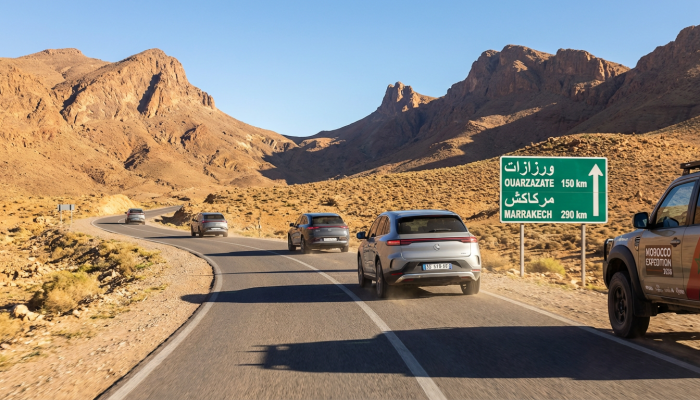
Driving in Morocco presents both incredible opportunities and unique challenges that differ significantly from Western driving experiences. The freedom to explore Morocco's diverse landscapes—from Atlantic beaches to Sahara dunes, from imperial cities to mountain villages—makes driving one of the most rewarding ways to experience the country. However, Morocco's road conditions, traffic culture, and local driving customs require preparation, patience, and adaptability from international visitors.
This comprehensive guide to driving in Morocco covers everything you need to know: legal requirements and documentation, essential traffic rules and regulations, regional road conditions, safety considerations, navigation strategies, and practical tips for specific scenarios. Whether you're planning car rental in Marrakech, exploring from Casablanca, or navigating the imperial cities, understanding driving in Morocco ensures safer, more enjoyable travels throughout this captivating North African kingdom.
Legal Requirements for Driving in Morocco
Before driving in Morocco, you must meet specific legal requirements and carry proper documentation. Moroccan authorities strictly enforce these requirements, and failing to present correct documents during police checkpoints can result in fines, vehicle impoundment, or travel complications.
📄 Valid Driver's License
Driving in Morocco requires a valid driver's license from your home country. The license must be:
- Currently valid (not expired) at the time of your Morocco visit
- Held for at least one year (most rental companies require this minimum)
- In your physical possession (digital copies not accepted)
- Category B or equivalent for standard passenger vehicles
🌍 International Driving Permit (IDP)
While not always strictly enforced, an International Driving Permit is strongly recommended and technically required for driving in Morocco:
- Translates your license into Arabic and French, eliminating language barriers
- Required by most insurance policies for coverage validity
- Simplifies police interactions at checkpoints (common when driving in Morocco)
- Costs $20-30 USD/€15-25 and remains valid for one year
- Obtain before departure from your home country's automobile association (AAA, AA, ADAC, etc.)
🚗 Vehicle Documentation
When driving in Morocco, you must carry vehicle-related documents at all times:
- Rental agreement showing you're authorized to drive the vehicle
- Vehicle registration (carte grise) provided by rental company
- Insurance documents proving valid coverage (see our insurance guide)
- Emergency contact information for your rental company
- Passport for identification during police checks
⚠️ Critical Note: Police checkpoints are extremely common when driving in Morocco, particularly on highways and when entering/exiting cities. Officers routinely request documentation. Keep all required documents easily accessible (not buried in luggage) to avoid delays and demonstrate compliance. Polite cooperation at checkpoints prevents complications and expedites the process.
Essential Traffic Rules for Driving in Morocco
Morocco follows standard international traffic conventions with some local variations. Understanding these rules before driving in Morocco prevents violations, fines, and dangerous situations.
Drive on the Right
Driving in Morocco follows right-hand traffic. Overtaking occurs on the left. This aligns with continental Europe but differs from UK, Ireland, Cyprus, Malta, Japan, Australia, and several other countries. Adjust accordingly if coming from left-hand traffic regions.
Speed Limits
- Urban areas: 40-60 km/h (25-37 mph)
- Rural roads: 80-100 km/h (50-62 mph)
- Highways: 100-120 km/h (62-75 mph)
- Variable limits clearly signed
Seat Belt Laws
Seat belts are mandatory for all occupants when driving in Morocco. Front seat passengers must wear belts; back seat belts required where available. Children under 10 must sit in rear seats. Child car seats recommended but not strictly enforced. Fines: 300-600 MAD ($30-$60).
Mobile Phone Ban
Using handheld mobile phones while driving in Morocco is strictly prohibited. Hands-free devices are permitted. Police actively enforce this rule, particularly at urban traffic lights. Violations result in 600 MAD ($60) fines. Mount your phone for GPS navigation rather than holding it.
Alcohol Limit: Zero Tolerance
Morocco enforces zero tolerance for drinking and driving. Legal limit: 0.02% BAC (effectively zero). Penalties include heavy fines (up to 2,000 MAD/$200), license suspension, vehicle impoundment, and potential imprisonment. Never drive after consuming any alcohol when driving in Morocco.
Roundabout Priority
Traffic already in roundabouts has priority when driving in Morocco. Yield to vehicles on your left before entering. Signal when exiting. However, local drivers often ignore these rules—drive defensively. Roundabouts replace many intersections in Moroccan cities; mastering them is essential.
💡 Reality Check: While Morocco has clear traffic laws, enforcement varies significantly, and local driving culture often disregards posted rules. You'll witness frequent speeding, aggressive overtaking, and creative interpretations of traffic signals. As a foreign driver, however, you should follow all regulations strictly—police target rental vehicles and tourist plates more heavily than local drivers. Defensive driving and legal compliance protect you from complications when driving in Morocco.
Road Conditions When Driving in Morocco
Road quality varies dramatically throughout Morocco, from European-standard highways to barely-maintained mountain tracks. Understanding what to expect on different route types helps you plan appropriately and drive safely.
🛣️ Highways (Autoroutes)
Quality: Excellent. Morocco's toll highways offer superb conditions comparable to European motorways:
- Well-maintained multi-lane roads with clear signage
- Regular rest areas with facilities every 40-60 km
- Speed limit: 120 km/h, actively enforced by radar
- Electronic toll collection (cash and card accepted)
- Connect major cities: Casablanca-Rabat-Tangier, Casablanca-Marrakech, etc.
Toll Costs: Approximately 0.60-0.80 MAD per km ($0.06-$0.08). Example: Casablanca to Marrakech (240 km) costs ~150 MAD ($15). Budget for tolls when driving in Morocco's major highways.
🛤️ National Roads (Routes Nationales)
Quality: Good to Variable. These free roads connect most destinations:
- Generally paved and adequately maintained
- Two lanes (one each direction) most common
- Condition varies: excellent near cities, deteriorating in rural areas
- Speed limit: 80-100 km/h, but expect slower due to traffic
- Frequent small towns requiring speed reductions
- Watch for pedestrians, cyclists, donkey carts, and livestock
Caution Areas: Potholes, unmarked speed bumps, and suddenly narrowing roads. National roads require more alertness when driving in Morocco compared to highways.
⛰️ Mountain Roads (Atlas & Rif)
Quality: Challenging. Mountain driving in Morocco demands experience and caution:
- Narrow, winding roads with steep drops and no guardrails
- Hairpin turns requiring slow speeds (20-40 km/h)
- Potential for rockslides, especially after rain
- Snow/ice in winter at higher elevations (check conditions)
- Limited overtaking opportunities; patience essential
- Stunning scenery but requires full concentration
Key Routes: Tizi n'Tichka (Marrakech-Ouarzazate), Tizi n'Test, routes to Chefchaouen. SUVs recommended for comfort and safety when driving in Morocco's mountain regions.
🏙️ Urban Roads (Major Cities)
Quality: Variable, Traffic: Heavy. City driving in Morocco presents unique challenges:
- Marrakech & Fes: Chaotic traffic near medinas, aggressive driving, narrow streets
- Casablanca: Heavy congestion, complex intersections, fast-paced traffic
- Rabat: More organized than other cities but still busy
- Frequent roundabouts (traffic circles) requiring vigilance
- Motorcycles and scooters weaving through traffic
- Pedestrians crossing unpredictably; constant alertness required
Tip: Many travelers find urban driving in Morocco most stressful. Consider using taxis within cities and your rental vehicle for intercity travel and excursions.
🚨 Navigation Tools Essential: GPS navigation or offline maps (Maps.me, Google Maps offline) are crucial when driving in Morocco. Road signage exists but can be inconsistent, particularly in rural areas. Many destinations lack clear addressing systems. Pre-download maps for your entire route to ensure navigation capability even without mobile data coverage in remote regions.
Driving Culture & Local Customs in Morocco
Understanding Moroccan driving culture is as important as knowing traffic laws. Local driving customs differ significantly from Western norms, and adapting your expectations reduces stress and improves safety when driving in Morocco.
⚡ Aggressive & Creative Driving
Moroccan drivers often exhibit assertive, sometimes aggressive behavior that shocks visitors accustomed to orderly traffic. Expect frequent overtaking on blind curves, minimal following distances, and creative use of road space. Lane markings serve more as suggestions than rules. Drivers routinely create unofficial lanes or squeeze through impossibly tight gaps. Stay calm, drive defensively, and don't take aggressive behavior personally—it's standard driving in Morocco culture, not directed at you specifically.
📯 Horn Communication
Car horns function as essential communication tools when driving in Morocco, used far more liberally than in Western countries. Horns signal: "I'm overtaking," "Watch out," "Hurry up," "Thank you," or simply "I'm here." Expect near-constant honking in cities. Don't interpret horn use as anger or aggression—it's standard practice. You'll likely need to use your horn too, particularly when overtaking on rural roads to alert oncoming traffic and vehicles ahead.
🚦 Traffic Signals: Guidelines Not Rules
Traffic lights exist in Moroccan cities, but local drivers treat them flexibly. Red lights at empty intersections often get ignored, especially late at night. Yellow lights mean "accelerate" rather than "prepare to stop." You should obey all signals properly as a foreign driver, but anticipate that others won't. Check intersections carefully even with green lights—vehicles running red lights are common when driving in Morocco.
🐴 Livestock & Rural Hazards
Rural driving in Morocco includes unexpected obstacles rarely encountered in developed countries: donkeys, goats, sheep, cattle, and camels on or beside roads. Animals may wander into traffic suddenly. Shepherds move flocks across roads without warning. Slow down when approaching animals; honking may frighten them into unpredictable movements. Dawn and dusk present highest animal hazard risk. This wildlife reality is unavoidable when driving in Morocco's countryside—patience and reduced speed are essential.
🚸 Pedestrian Crossing Culture
Pedestrians in Morocco cross roads wherever convenient, not just at designated crosswalks. Expect people to step into traffic suddenly, particularly in urban areas and near markets. Children playing near roads are common. Drivers rarely stop for pedestrians, even at marked crossings. As a foreign driver, you should be more cautious—stop for pedestrians when safe to do so, but recognize that this courtesy isn't culturally expected and may confuse following drivers. Defensive awareness of pedestrians is crucial when driving in Morocco.
🤝 Right of Way: Negotiable
Official right-of-way rules exist, but practical right-of-way when driving in Morocco often goes to whoever proceeds most assertively. At unmarked intersections, the vehicle that pushes forward first usually claims priority. Larger vehicles often assume priority over smaller ones. Rather than insisting on your legal right-of-way, adopt a flexible, defensive approach: yield when prudent, proceed cautiously when your turn comes, and prioritize safety over principle. This adaptive mindset prevents accidents and reduces stress.
🧘 Mental Preparation: Successful driving in Morocco requires adjusting your expectations and stress triggers. What seems chaotic or dangerous initially becomes manageable once you accept the local driving culture. Don't expect orderly, rule-following behavior. Instead, maintain constant vigilance, drive defensively, and remember that aggressive driving isn't personal—it's simply the norm. Most travelers report that after 1-2 days of adjustment, Moroccan driving becomes manageable, even though it never feels exactly comfortable by Western standards.
Police Checkpoints & Enforcement When Driving in Morocco
Police checkpoints are ubiquitous when driving in Morocco—you'll encounter multiple checkpoints on any long-distance journey. Understanding how to navigate these interactions smoothly prevents delays and complications.
What to Expect at Checkpoints
📍 Checkpoint Locations
Common checkpoint locations when driving in Morocco include: highway entry/exit points, city approaches, regional boundaries, and randomly along major routes. Gendarmerie (rural police) and urban police both conduct checks. Checkpoints may be permanent structures or temporary roadside stops.
🛑 Proper Procedure
When approaching checkpoints: slow down gradually, roll down your window, keep hands visible on steering wheel, wait for officer to speak first, respond politely in French or English, present documents when requested (license, IDP, passport, rental agreement, insurance), and wait for dismissal before proceeding. Most checks take 30 seconds to 2 minutes. Remain calm and courteous—cooperation ensures smooth passage.
📄 Required Documents
Always keep accessible (not in trunk): driver's license, International Driving Permit, passport, rental agreement, insurance certificate ("carte verte"), and vehicle registration. Officers may request any combination of these documents when driving in Morocco. Having them organized and ready expedites the process and demonstrates compliance.
💰 Fines & Bribery
Legitimate violations result in official fines (speeding, seat belt violations, expired documents, etc.). Officers issue receipts for legitimate fines. However, some officers may suggest unofficial "on-the-spot payments" (bribes). Best practice: Politely decline and ask for official documentation. If truly at fault, request a proper fine with receipt. Most checkpoints when driving in Morocco are legitimate—officers simply verify documentation and wave you through. Bribery solicitation occurs but isn't universal; don't assume all officers are corrupt.
✅ Checkpoint Success Strategy: Keep documents organized and easily accessible, remain polite and cooperative, speak French if possible (or English confidently), avoid arguing even if frustrated, and remember that most checks are routine and non-problematic. Thousands of tourists navigate checkpoints successfully every day when driving in Morocco. The process becomes routine after your first few encounters. Treat checkpoints as normal travel procedure rather than threatening situations.
Night Driving in Morocco: Recommendations & Hazards
Night driving in Morocco presents significantly elevated risks compared to daytime travel. Most experienced Morocco travelers and rental companies strongly advise avoiding night driving whenever possible, particularly outside major cities.
🌙 Primary Hazards
- Livestock on roads: Animals without reflective markers, nearly invisible until too late
- Pedestrians in dark clothing: Walking along roads with no streetlights
- Unlighted vehicles: Carts, bicycles, motorcycles without lights or reflectors
- Poor road lighting: Even major routes often lack street lighting outside cities
- Potholes invisible in darkness: Road damage harder to spot and avoid
- Fatigue factor: Increased driver exhaustion on unfamiliar roads
🚗 If You Must Drive at Night
- Reduce speed significantly below daytime pace (50-70% of normal speed)
- Use high beams on rural roads when no oncoming traffic
- Stay extremely alert for road obstacles and animals
- Keep windows down slightly to hear approaching hazards
- Take frequent breaks to combat fatigue
- Ensure your rental vehicle has functioning headlights and high beams
- Consider overnight stops rather than pushing through darkness
🏙️ Urban vs. Rural Night Driving
Cities (Marrakech, Casablanca, Fes, Rabat): Night driving in Morocco's major cities is generally acceptable. Streets are lit, traffic remains heavy, and navigation is feasible. However, parking becomes more challenging, and some areas should be avoided after dark.
Rural areas & intercity routes: Strongly discouraged. The combination of poor lighting, road hazards, and unpredictable obstacles creates unacceptable risk levels. Plan itineraries to arrive at destinations before sunset. If delayed, consider stopping in a town with accommodation rather than continuing in darkness.
🚨 Expert Recommendation: Avoid night driving in Morocco whenever possible, particularly on rural and mountain roads. Countless travelers and local rental companies echo this advice based on genuine accident risk—not exaggerated fear. Plan daily routes to reach destinations by 5:00-6:00 PM (earlier in winter). The risk-reward calculation strongly favors daytime-only driving in Morocco. Your car rental insurance may not cover accidents caused by driving in hazardous conditions you could have avoided.
Parking When Driving in Morocco
Parking in Moroccan cities operates differently from Western norms, with official paid parking zones and unofficial "gardiens" (parking attendants) managing most public parking areas.
Paid Parking Zones
Blue lines mark official paid parking zones in city centers. Pay parking meters or attendants wearing official vests. Rates: 2-5 MAD per hour ($0.20-$0.50). Display tickets visibly on dashboard. These zones offer relative security when driving in Morocco and parking temporarily.
Parking Gardiens
Unofficial parking attendants ("gardiens") manage most street parking and lots. They'll wave you into spaces and watch your vehicle. Tip 5-10 MAD ($0.50-$1) when you return. This system is ubiquitous when driving in Morocco—refusing to tip risks vehicle damage. Consider it informal parking fee + security service.
Secured Parking Lots
Hotel parking (if available), dedicated parking garages, and guarded lots near medinas offer highest security. Rates: 10-30 MAD ($1-$3) for several hours or overnight. Worth the cost for overnight parking or when leaving vehicles unattended for extended periods during driving in Morocco.
Parking Security
Never leave valuables visible in parked vehicles. Remove all bags, electronics, and personal items—or lock them in trunk before arriving at parking location (thieves watch). Car break-ins target tourist rental vehicles. Your rental insurance doesn't cover personal belongings theft.
💡 Medina Parking: You cannot drive into historic medinas (Marrakech, Fes, etc.)—they're pedestrian-only. Park at designated lots near major gates (Bab Boujeloud in Fes, Bab Doukkala in Marrakech). Ask your riad for parking recommendations when booking. Many riads arrange nearby parking with gardiens. Budget 20-50 MAD/day ($2-$5) for medina-area parking when driving in Morocco and staying in traditional accommodations.
Emergency Procedures While Driving in Morocco
Knowing how to handle emergencies—accidents, breakdowns, medical situations—before they occur ensures better outcomes and reduces panic if problems arise during driving in Morocco.
🚨 In Case of Accident
- Stop immediately and turn on hazard lights
- Check for injuries—call 150 (ambulance) if needed
- Call police (190) for any accident with injuries or disputes about fault
- Contact rental company using emergency number on your contract
- Document everything: photos of all vehicles, damage, license plates, location
- Obtain police report ("constat amiable")—mandatory for insurance claims
- Exchange information with other driver (name, license, insurance)
- Do not admit fault or sign documents you don't understand
🔧 Vehicle Breakdown
- Move vehicle off road if safely possible
- Turn on hazard lights and place warning triangle if available
- Contact rental company immediately—they'll arrange assistance or replacement vehicle
- Note your location using GPS coordinates or nearest town/landmark
- Stay with vehicle in daylight; consider hiring local help for simple issues (flat tire, etc.)
- Do not attempt major repairs yourself—this may void rental agreement
📞 Essential Emergency Numbers
- Police: 190 (or 19 from landline)
- Ambulance/Medical Emergency: 150 (SAMU)
- Fire Department: 15
- Gendarmerie (rural police): 177
- Highway Assistance: Numbers posted at rest areas
- Your Rental Company: Save emergency number in phone immediately upon pickup
🏥 Medical Emergencies: For serious medical emergencies while driving in Morocco, head to private clinics in major cities (faster, higher quality than public hospitals). Clinique Yasmine in Marrakech, Clinique Badr in Casablanca, and Clinique Avicenne in Rabat serve English-speaking patients. Your travel insurance should cover private medical care. Keep your insurance documents and passport accessible. Pharmacies ("pharmacie") are well-stocked and staff often speak French or English for minor medical needs.
Fuel & Service Stations When Driving in Morocco
Understanding fuel availability, pricing, and service station operations helps you plan routes and manage costs when driving in Morocco.
⛽ Fuel Availability
Cities & Highways: Abundant stations. Rural/Mountain Areas: Stations can be 50-100+ km apart. Strategy: Never let tank drop below 1/4 when driving in Morocco's remote regions. Refuel in towns even if not empty. Some small stations may lack diesel or accept cash only.
Major Brands: Afriquia, Shell, Total, Petrom—reliable quality and facilities.
💰 Fuel Prices
Fuel prices in Morocco are government-regulated and uniform nationwide (slight variations possible):
- Gasoline (Essence): ~13-14 MAD/liter ($1.30-$1.40)
- Diesel (Gasoil): ~11-12 MAD/liter ($1.10-$1.20)
- Prices similar to Western Europe, lower than UK, higher than USA
🔧 Service & Facilities
Most Moroccan fuel stations offer full service—attendants pump fuel for you. Tipping 2-5 MAD ($0.20-$0.50) is customary but not mandatory. Major highway stations include:
- Clean restrooms (varying quality)
- Small shops selling snacks, drinks, basics
- Prayer facilities (common in Muslim country)
💳 Payment Methods
Cities: Most stations accept credit cards. Rural areas: Cash (MAD) often required. Best practice: Always carry 200-500 MAD cash ($20-$50) for fuel in remote regions when driving in Morocco. International cards (Visa, Mastercard) work at major branded stations. Inform your bank of Morocco travel to prevent card blocks.
⛽ Rental Fuel Policy: Most rentals use "full-to-full" policy—you receive vehicle with full tank and return it full. Refuel before returning to rental depot to avoid expensive refueling charges (typically 150-200% of pump prices). GPS navigation apps show nearby fuel stations. Plan your final refueling stop 10-15 minutes before airport/rental return to ensure you have time without stress.
Frequently Asked Questions: Driving in Morocco
Is it safe to drive in Morocco as a tourist?
Yes, thousands of tourists drive in Morocco safely every year. While driving culture differs from Western norms and requires adjustment, proper preparation, defensive driving, and following safety guidelines make Morocco road trips manageable and rewarding. Major highways are excellent, and rental vehicles are reliable. The main challenges are aggressive urban driving and rural road hazards—both manageable with awareness and caution.
Do I need an International Driving Permit for driving in Morocco?
Technically yes, though enforcement varies. An International Driving Permit is strongly recommended and may be required by your rental company or insurance policy. It translates your license into Arabic and French, simplifying police interactions at checkpoints. IDPs cost $20-30/€15-25, remain valid one year, and eliminate potential complications. Obtain one from your home country automobile association before departure.
What side of the road do you drive on in Morocco?
Driving in Morocco follows right-hand traffic (same as continental Europe, USA, and most countries). The steering wheel is on the left side of vehicles, and you overtake on the left. This differs from UK, Ireland, Japan, Australia, and other left-hand traffic countries. Allow adjustment time if coming from left-hand traffic regions.
Are Morocco's roads in good condition?
Road quality when driving in Morocco varies dramatically: toll highways (autoroutes) are excellent—comparable to European motorways. National roads range from good near cities to variable in rural areas. Mountain roads can be challenging with narrow passes and hairpin turns. Urban roads face heavy traffic but are generally paved. Overall, major routes are well-maintained, making intercity travel straightforward with proper vehicle selection.
Should I avoid night driving in Morocco?
Yes, strongly recommended to avoid night driving in Morocco, especially on rural and mountain roads. Hazards include livestock on roads, unlighted vehicles/carts, pedestrians in dark clothing, poor road lighting, and invisible potholes. Urban night driving in major cities is generally acceptable. Plan itineraries to reach destinations before sunset. Most rental companies and experienced travelers echo this advice—accident risk increases significantly after dark.
What are speed limits when driving in Morocco?
Standard speed limits for driving in Morocco: 40-60 km/h (25-37 mph) in urban areas, 80-100 km/h (50-62 mph) on rural roads, and 100-120 km/h (62-75 mph) on highways (autoroutes). Variable limits are clearly signed. Speed cameras actively enforce limits, particularly on highways. Fines for speeding range from 300-1,400 MAD ($30-$140) depending on severity. Always obey posted limits.
How do I handle police checkpoints in Morocco?
Police checkpoints are routine when driving in Morocco. Slow down, roll down window, keep hands visible, wait for officer to speak, respond politely, present requested documents (license, IDP, passport, rental agreement, insurance), and wait for dismissal. Most checks take under 2 minutes. Keep documents easily accessible. Remain calm and cooperative—checkpoints are standard procedure, not threats. Thousands of tourists pass through checkpoints daily without issues.
Can I drive from Morocco to Spain or other countries?
Most Moroccan rental agreements prohibit taking vehicles outside Morocco, including to Spain, Ceuta, Melilla, Algeria, or Mauritania. Your insurance typically doesn't extend beyond Morocco's borders. If cross-border travel is essential, discuss this requirement explicitly with your rental company before booking—special authorization and additional insurance may be arranged for significant extra fees, though many companies simply don't allow it.
Related Resources: Car Rental in Morocco
Complete Morocco Rental Guide
Comprehensive guide to planning and executing successful car rental experiences throughout Morocco.
Insurance Coverage Guide
Everything you need to know about insurance, deductibles, and protection for Morocco car rentals.
How to Rent Safely & Affordably
Practical tips for getting the best value and avoiding common pitfalls in Morocco car rentals.
Ready to Explore Morocco Safely?
Now that you understand driving in Morocco, book your vehicle with confidence. Marralux provides well-maintained cars, transparent insurance options, and expert guidance for safe, enjoyable Morocco road trips. All major cities covered with free airport delivery.
Book Your Morocco Adventure