
Car Rental in Morocco: Complete Guide 202 | Best Prices & Service
Last Updated: December 2025 | Reading Time: 18 minutes | Expert Guide by Marralux
📋 TL;DR – Quick Summary
Car rental in Morocco offers unmatched freedom to explore the country’s diverse landscapes—from imperial cities to the Sahara Desert. You’ll need a valid driver’s license (held for 1+ years), passport, credit card, and be at least 21 years old. An International Driving Permit is recommended if your license isn’t in Latin script. Costs for car rental in Morocco range from €25/day for economy cars to €100+ for SUVs. Book in advance, choose full insurance coverage, and always inspect your vehicle before departure. Morocco drives on the right, with police checkpoints common and traffic rules strictly enforced.
Jump to: Requirements | Vehicle Types | Pricing | Driving Tips | FAQ
1. Why Rent a Car in Morocco?
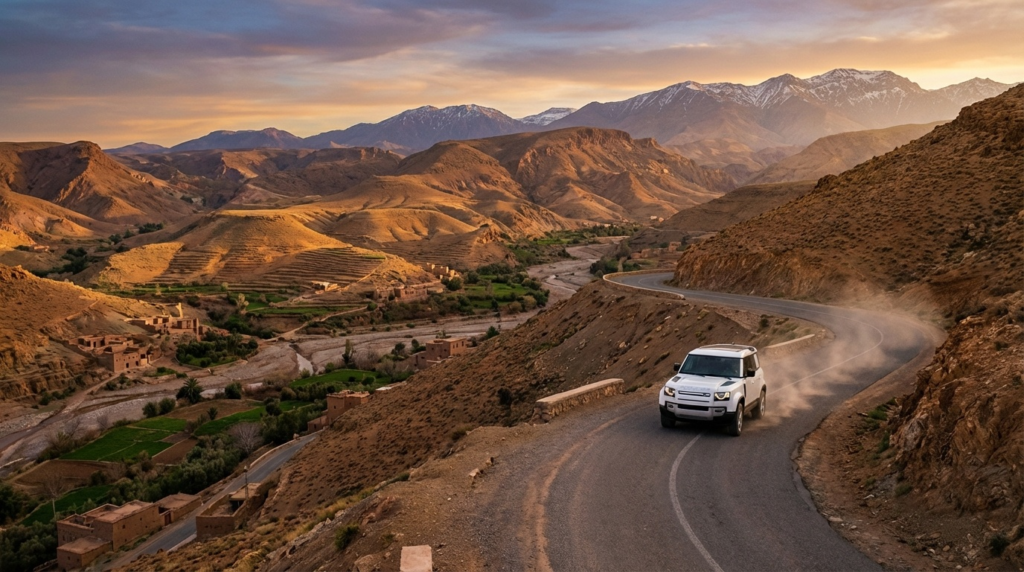
Morocco rewards independent exploration, which is why car rental in Morocco has become the preferred choice for discerning travelers. While the country has functional train and bus networks connecting major cities like Marrakech, Casablanca, and Fes, these public transport options operate on fixed schedules and predetermined routes. They cannot take you to the hidden kasbahs of the Dades Valley, the blue-washed streets of Chefchaouen’s quieter neighborhoods, or the panoramic viewpoints scattered throughout the Atlas Mountains.
The Freedom Factor
When you rent a car in Morocco, you become the architect of your own itinerary. Discover a roadside argan oil cooperative? Stop and learn about traditional production methods. Spot a spectacular sunset location in the Anti-Atlas? Pull over safely and capture the moment. No rushing to catch the last bus, no negotiating taxi fares for every single transfer, no compromising your schedule to match public transport timetables.
Comparative Analysis: Car Rental vs. Alternatives
Morocco’s ONCF train network efficiently connects coastal cities and reaches inland to Marrakech and Fes, offering comfortable first and second-class carriages. CTM and Supratours buses serve additional destinations with reasonable reliability. However, both modalities limit you to major routes. Grand Taxis—large Mercedes sedans operating on shared routes—fill some gaps but present challenges: they typically depart only when full (six passengers), offer limited luggage space, and become expensive when booking exclusively for your group.
A rental vehicle eliminates these constraints entirely. You gain climate-controlled comfort, secure luggage storage, privacy for conversations and planning, and the ability to deviate from main highways to explore scenic backroads. For families or groups traveling together, the per-person cost often falls below combined public transport fares, especially on multi-day itineraries.
🔗 Planning your route? Explore car rental options in Marrakech for Atlas Mountain access, or Casablanca airport pickup for coastal road trips.
Expert Insight from Marralux:
“The most memorable Moroccan experiences happen off the beaten path. Our clients consistently report that unplanned stops—a family-run pottery workshop, a hilltop viewpoint, a local weekly souk—become trip highlights. This spontaneity only becomes possible with independent transport.”
2. Requirements to Rent a Car in Morocco
Understanding legal and agency-specific requirements for car rental in Morocco prevents last-minute complications at the rental desk. Moroccan authorities and international rental standards establish clear prerequisites for vehicle rental, and knowing these before you book ensures a smooth pickup experience.
2.1 Age Requirements
Minimum Age: Most agencies offering car rental in Morocco require drivers to be at least 21 years old. However, specific vehicle categories impose higher age thresholds. Premium vehicles, luxury models, and high-performance SUVs typically require drivers aged 25 or older. Some agencies enforce a 23-year minimum for standard SUV rental.
Young Driver Surcharge: Drivers under 25 years old should anticipate daily surcharges ranging from €10-25, depending on vehicle category and rental duration. This fee reflects statistically higher accident rates in younger age demographics.
Maximum Age: While less common, some agencies impose maximum age limits (typically 70-75 years) or require additional medical documentation for senior drivers. Always verify age-related policies during booking.
2.2 Driving License Requirements
European & North American Licenses: Valid driving licenses issued by EU member states, the United Kingdom, the United States, Canada, Australia, and New Zealand are generally accepted for tourist rentals up to 90 days. The license must have been held continuously for a minimum of one year (some premium vehicles require two years of driving experience).
International Driving Permit (IDP): Moroccan law technically requires an IDP alongside your national license if your original document isn’t in French or Arabic. However, enforcement varies. European licenses in Latin script rarely encounter issues, but police checkpoints occasionally request IDPs from drivers with non-Latin script licenses (Arabic from Gulf countries, Cyrillic, Asian scripts).
Practical Recommendation: Obtain an IDP before departure. The document costs approximately €15-20 in most countries, remains valid for one year, and provides peace of mind during police checkpoints. It serves as an official translation of your license credentials, preventing potential misunderstandings.
🔗 Traveling from Europe? Learn about driving license requirements for EU citizens renting in Morocco.
2.3 Required Documentation
Prepare these documents in advance to streamline vehicle collection:
Passport: Original passport with at least six months validity remaining. Photocopies are insufficient—rental agencies must verify and record your passport number for legal compliance and insurance purposes.
Driver’s License: Original license (plus IDP if applicable). Ensure the license displays clear photography and hasn’t expired. Some agencies reject licenses expiring within the rental period.
Credit Card: Valid credit card in the primary driver’s name. Debit cards rarely qualify for deposit blocking. The available credit limit must exceed the security deposit amount (typically €500-2000 depending on vehicle class).
Booking Confirmation: Printed or digital voucher containing reservation details, selected vehicle category, pickup/return locations, and confirmation number.
Additional Driver Documentation: If registering additional drivers, each must present their own valid license and passport. Additional driver fees typically range €5-10 per day.
2.4 Security Deposit & Payment Methods
Deposit Mechanism: Rental agencies block (not charge) a refundable security deposit on your credit card at collection. This pre-authorization covers potential damages, traffic fines, toll charges, or fuel discrepancies. The blocked amount typically ranges from €500 for economy vehicles to €2000+ for luxury models.
Timeline: Deposits release 7-21 days after vehicle return, depending on your card issuer’s processing speed. Some banks hold blocked funds longer—verify timing with your financial institution before departure.
Payment Flexibility: While credit cards remain standard for deposits, final rental charges can often be settled via debit card, cash, or bank transfer. Marralux offers transparent pricing with the total cost confirmed at booking—no hidden charges appear at collection.
Expert Insight from Marralux:
“We recommend travelers notify their credit card company about upcoming Moroccan transactions. International holds sometimes trigger fraud alerts, potentially leaving you without deposit authorization at the rental desk. A quick call before departure prevents this frustration.”
3. Types of Rental Vehicles Available
Morocco’s diverse terrain and your specific itinerary requirements dictate optimal vehicle selection. Marralux maintains a comprehensive fleet serving varied travel needs and budgets.
3.1 Economy Cars
Ideal For: Solo travelers, couples, city-focused itineraries, budget-conscious rentals
Representative Models: Dacia Logan, Renault Clio, Hyundai i10, Peugeot 208
Economy vehicles excel in urban environments with excellent fuel efficiency (often 5-6L/100km), compact dimensions for parking in medina-adjacent areas, and affordable daily rates. These cars handle paved highways and well-maintained roads comfortably but lack the clearance and suspension for rough mountain tracks or unpaved desert routes.
Limitations: Minimal luggage capacity (suitable for two medium suitcases), less powerful engines struggle on steep mountain ascents, basic interior comfort for long-distance drives.
🔗 Budget traveler? Discover cheap car rental options in Morocco starting from €25/day.
3.2 Compact & City Cars
Ideal For: Urban navigation, short-distance travel, easy parking
Representative Models: Fiat 500, Renault Twingo, Citroën C3
These vehicles offer enhanced maneuverability in Morocco’s densest urban environments—navigating Casablanca’s busy boulevards, finding parking near Rabat’s Hassan Tower, or approaching Fes medina gates. Slightly more comfortable than economy class with modern features like Bluetooth connectivity and improved air conditioning systems.
3.3 SUVs & 4×4 Vehicles
Ideal For: Atlas Mountains, desert excursions, unpaved roads, adventurous itineraries
Representative Models: Dacia Duster, Toyota Land Cruiser, Jeep Grand Cherokee, Nissan Patrol
Morocco’s geographical diversity demands capable vehicles for certain routes. Standard sedans simply cannot handle the rocky tracks to Ait Benhaddou’s viewpoints, the sandy approaches to Erg Chebbi dunes near Merzouga, or the steep switchbacks of Tizi n’Tichka pass after winter snowfall.
Four-Wheel Drive Capability: Genuine 4×4 systems (not just AWD) become essential for off-road desert camping, reaching remote Berber villages in the High Atlas, or winter mountain crossings. These vehicles provide:
- Ground clearance (20-25cm) to avoid undercarriage damage on rocky terrain
- Enhanced suspension systems absorbing rough road impacts
- Locking differentials for sand and mud traction
- Robust tires rated for mixed terrain
Comfort Benefits: Beyond capability, SUVs offer elevated driving positions (improving visibility in chaotic traffic), spacious interiors for long journeys, and superior sound insulation reducing road noise fatigue.
🔗 Planning desert adventures? Compare 4×4 and SUV rental options for Sahara access.
3.4 Luxury Vehicles
Ideal For: Business travel, special occasions, VIP airport transfers, premium comfort
Representative Models: Mercedes-Benz E-Class, BMW 5 Series, Range Rover, Audi A6
Morocco’s luxury rental market serves business executives attending meetings in Casablanca’s financial district, couples celebrating anniversaries with premium comfort, and travelers who prioritize vehicle quality and prestige. These vehicles feature:
- Advanced safety systems (adaptive cruise control, lane departure warnings)
- Premium leather interiors with climate-controlled seats
- Superior sound systems and technology integration
- Powerful, refined engines making highway travel effortless
Status Considerations: In business contexts, arriving in a premium vehicle can influence perceptions. Morocco’s luxury hospitality industry (five-star riads, exclusive desert camps, high-end restaurants) complements the premium vehicle experience.
3.5 Minivans & Family Vehicles
Ideal For: Extended families, group travel, significant luggage requirements
Representative Models: Renault Trafic (9-seater), Mercedes Vito, Hyundai H1
Multi-generational family trips to Morocco or friend groups benefit enormously from minivan rental. These vehicles provide:
- 7-9 passenger capacity with genuine comfort (not cramped bench seating)
- Substantial luggage space accommodating multiple large suitcases
- Flexible seating configurations (some seats removable for extra cargo)
- Entertainment features for long-distance family travel
Cost Efficiency: When dividing rental costs among six or more travelers, per-person expenses often match economy car rates while providing dramatically superior comfort and utility.
Expert Insight from Marralux:
“We frequently advise clients selecting vehicles based solely on passenger count to reconsider luggage capacity. A family of five might technically fit in a sedan, but with luggage, road trip supplies, and shopping acquisitions, they’ll appreciate a minivan’s spaciousness throughout their journey.”
🔗 Browse our complete fleet: All Marralux vehicle categories
4. Where to Rent: Cities & Airports
Marralux provides nationwide car rental in Morocco services across the country’s key tourism and business centers, offering flexibility in pickup and return locations for both leisure and business travelers.
4.1 Major City Locations
Marrakech – Car Rental Hub
As Morocco’s premier tourist destination, Marrakech generates the highest rental demand. The city serves as the ideal starting point for Atlas Mountains exploration, Atlantic coast road trips (Essaouira), and desert routes toward Ouarzazate and the Dades Valley.
Pickup Locations: Marrakech Menara Airport (RAK), Gueliz city center offices, major hotel delivery
Popular Routes from Marrakech:
- Ouzoud Waterfalls (150km northeast)
- Essaouira coastal town (190km west)
- Ait Benhaddou kasbah (190km southeast)
- Imlil mountain village and Toubkal basecamp (65km south)
🔗 Start your journey: Car rental Marrakech with free airport delivery
Casablanca – Business & Transit Center
Morocco’s economic capital and largest city handles the majority of international long-haul flights through Mohammed V Airport (CMN). Business travelers rent vehicles for meetings in the Casablanca Finance City, while tourists use the city as a gateway to coastal destinations or as a northern itinerary starting point.
Strategic Advantage: Casablanca’s location enables efficient routes to Rabat (capital, 90km), El Jadida (coastal town, 100km), or even Marrakech (240km) via modern toll highway.
🔗 International arrival? Casablanca airport car rental available 24/7
Car rental in Agadir – Beach & Surf Destination
Southern Morocco’s beach resort city attracts surf enthusiasts, sun-seekers, and travelers exploring the Anti-Atlas region. A rental car unlocks access to Paradise Valley’s natural pools, Taghazout’s surf beaches, and the coastal route toward Tiznit and Sidi Ifni.
Car Rental in Tangier – Northern Gateway
Positioned at Africa’s northwestern tip, Tangier offers proximity to Spain (ferry connections), making it popular for European road-trippers bringing vehicles via ferry or flying in to explore northern Morocco. Routes lead to Chefchaouen’s blue streets (110km), Tetouan’s medina (60km), and the Rif Mountains.
Fes, Rabat, Essaouira, Ouarzazate
Beyond major hubs, Marralux offers car rental in Morocco services in secondary tourism centers, enabling convenient one-way rentals. Collect your vehicle in Fes to explore the Middle Atlas cedar forests, or pick up in Ouarzazate to access desert valleys and kasbahs—then return it in Marrakech or Agadir without backtracking.
4.2 Airport Rental Services
Meet & Greet Convenience
Airport collection eliminates the stress of navigating unfamiliar cities immediately upon arrival. Marralux offers complimentary Meet & Greet service at major airports—we track your flight in real-time and meet you in the arrivals hall with your prepared vehicle and documentation.
Key Airport Locations:
Marrakech Menara Airport (RAK): Morocco’s second-busiest airport, serving European charters and scheduled flights. High tourism volume means advance booking is essential during peak seasons (March-May, September-November).
Casablanca Mohammed V Airport (CMN): Primary international hub with intercontinental connections from North America, Middle East, and Africa. Terminal layout can be confusing—our staff meet you at designated arrival points with clear signage.
Agadir Al Massira Airport (AGA): Seasonal European flights. Smaller terminal with simpler logistics. Vehicle collection typically processes within 15 minutes during off-peak periods.
Fes-Saïss Airport (FEZ): Growing regional airport. Proximity to the medina (15km) makes immediate vehicle collection practical.
Tangier Ibn Battouta Airport (TNG): Expanding capacity with new terminal. Serves European routes and domestic connections.
One-Way Airport Rentals
Marralux facilitates flexible itineraries through one-way rentals. Common routes include:
- Casablanca Airport → Marrakech (return via Marrakech Airport)
- Marrakech → Agadir (coastal route, return via Agadir Airport)
- Tangier → Fes (northern circuit)
One-way fees vary based on distance and vehicle repositioning costs. Our booking system calculates charges transparently during reservation.
Expert Insight from Marralux:
“We recommend airport collection for international arrivals but city return for departures. This allows you to drop the vehicle the evening before your flight, take a taxi to your airport hotel, and avoid morning rental procedures when you’re focused on checking in and boarding.”
🔗 Compare all locations: Nationwide car rental coverage
5. Understanding Rental Costs in Morocco
Transparent car rental in Morocco pricing eliminates surprises and enables accurate budget planning for your journey. Multiple variables influence your total cost beyond the advertised daily rate—including duration, season, vehicle type, and insurance coverage—making it essential to understand the complete pricing structure.
5.1 Base Daily Rate Factors
Vehicle Category: Economy cars start around €25-35/day, mid-size sedans €40-60/day, SUVs €60-100+/day, luxury vehicles €100-250+/day. These rates fluctuate based on demand and seasonality.
Rental Duration: Longer rentals dramatically reduce daily costs through volume pricing. A 1-day economy rental might cost €40, while a 7-day rental averages €28/day (€196 total). Most agencies offer weekly and monthly rate structures with increasing discounts.
Seasonal Demand:
- High Season (March-May, September-November): Peak tourism increases prices by 30-50% compared to low season
- Shoulder Season (December-February, June): Moderate pricing with better availability
- Summer Heat (July-August): Paradoxically lower prices as intense heat reduces European tourism, despite being peak season for Gulf travelers
Booking Timing: Advance reservations (2-3 months before travel) secure lower rates and better vehicle selection. Last-minute bookings (within one week) face limited availability and premium pricing—sometimes double advance rates.
5.2 Average Price Ranges by Category
Economy Class: €25-40 per day
- Dacia Logan, Hyundai i10, Renault Clio
- Suitable for: Paved roads, cities, 1-2 passengers
- Weekly rate: €175-250
Standard Sedan: €40-60 per day
- Peugeot 301, Renault Symbol, larger family sedans
- Suitable for: Highway travel, 4-5 passengers, moderate luggage
- Weekly rate: €250-380
SUV / 4×4: €60-120 per day
- Dacia Duster (basic SUV): €60-80/day
- Toyota Land Cruiser (genuine 4×4): €90-120/day
- Suitable for: Mountains, desert, rough terrain
- Weekly rate: €420-750
Luxury Vehicles: €100-250+ per day
- Mercedes E-Class, BMW 5 Series, Range Rover
- Suitable for: Business travel, special occasions, premium comfort
- Weekly rate: €700-1,500+
Minivans: €70-110 per day
- 7-9 seater configurations
- Suitable for: Group travel, families
- Weekly rate: €450-700
5.3 Additional Costs to Consider
Insurance Upgrades: Standard CDW (Collision Damage Waiver) includes an excess/deductible of €800-1,500. Full coverage options reduce this to zero for €12-25/day additional charge. (Detailed insurance section follows.)
Additional Drivers: €5-10 per day per extra registered driver. Essential for sharing long-distance driving responsibilities.
GPS Navigation: €5-8 per day. Modern smartphones with offline maps (Maps.me, Google Maps offline) provide free alternatives.
Child Seats: €5-7 per day per seat. Legally required for children under specified ages. Some agencies include one free seat for week+ rentals.
One-Way Fees: €50-150 depending on drop-off distance from pickup location. Marrakech-Casablanca typically costs €50-80.
Fuel Policy: Most agencies operate “full-to-full” (receive with full tank, return with full tank). Some offer prepaid fuel options at slightly inflated rates—generally not cost-effective.
Airport Surcharges: Some agencies add €20-40 “airport fees” for terminal pickup. Marralux includes airport service without surcharges in our transparent pricing.
Young Driver Fees: €10-25/day for drivers aged 21-24.
5.4 Money-Saving Strategies
Book Weeks in Advance: Prices for car rental in Morocco accelerate as travel dates approach. Lock in rates early even if plans aren’t finalized—most agencies offer free cancellation 48-72 hours before pickup.
Rent for Full Weeks: Seven-day rates cost less than six individual days in virtually all pricing structures. If your trip spans six days, consider extending one day for better per-day rates.
Compare Inclusive Pricing: Verify whether quoted prices include taxes (20% VAT applies in Morocco), basic insurance, and unlimited mileage. Some agencies advertise attractive base rates but add these as “extras” at collection.
Avoid Airport Third-Party Kiosks: Independent booking sites sometimes offer attractive rates but use less reputable local agencies with older fleets, unclear insurance terms, and potential hidden charges. Booking directly with established agencies like Marralux provides recourse and accountability.
Travel Off-Peak: If your schedule allows flexibility, traveling during shoulder seasons (December-February) can reduce rental costs by 30% while offering pleasant weather in desert regions.
Group Cost-Sharing: An SUV for four people often costs less per person than individual economy cars, with added benefits of shared experience and single fuel expense.
Expert Insight from Marralux: “Our transparent pricing model for car rental in Morocco means the amount you see at booking equals your final cost—no surprise fees at collection. We’ve built our reputation on trust, and hidden charges destroy that foundation. Every inclusion and optional extra appears clearly during reservation.”
🔗 Ready to save? Get your personalized quote for car rental in Morocco with our transparent pricing calculator.
6. Insurance Options Explained
Understanding insurance for car rental in Morocco represents the most critical yet misunderstood aspect of the rental process. Clear comprehension protects you financially and provides peace of mind throughout your journey.
6.1 Mandatory Basic Coverage
Third-Party Liability Insurance: Moroccan law requires all vehicles carry liability insurance covering damages or injuries you cause to other people, vehicles, or property. This coverage is automatically included in every legitimate rental—never waive this, as it’s illegal to drive without it.
Coverage Limits: Basic liability typically covers claims up to MAD 2,000,000 (approximately €185,000). This protects you if you cause an accident damaging another vehicle or injuring other parties.
Collision Damage Waiver (CDW): Standard in most rentals, CDW limits your financial responsibility for damage to your rental vehicle. However, it includes an “excess” or “deductible”—the maximum amount you pay out-of-pocket for repairs.
How CDW Excess Works:
- If your CDW has a €1,000 excess and repairs cost €3,500, you pay €1,000; insurance covers the remaining €2,500
- If repairs cost €600, you pay €600 (below the excess threshold)
- Excess amounts typically range €800-2,000 depending on vehicle category
6.2 Full Coverage / Super CDW Options
Zero Excess Coverage: Premium insurance packages reduce your deductible to zero. Regardless of damage costs, your maximum payment is €0 (excluding coverage exclusions).
Cost: Typically €12-25 per day depending on vehicle value and rental duration. Weekly rates offer per-day discounts (€15/day if daily, €10/day for week+ rentals).
What Full Coverage Includes:
- Bodywork damage (scratches, dents, panel damage)
- Glass damage (windscreen, windows, mirrors)
- Tire damage (punctures, sidewall damage)
- Undercarriage damage (from rocky roads)
- Theft protection (reduces your liability in vehicle theft scenarios)
- Interior damage (seat tears, dashboard scratches)
Common Exclusions: Even full coverage excludes certain scenarios:
- Driving under the influence of alcohol or drugs
- Reckless or illegal driving behavior
- Driving on prohibited roads or surfaces (beaches, riverbeds)
- Damage from driver or passenger negligence
- Lost keys or lockouts
- Mechanical breakdown from driver abuse
6.3 Third-Party Insurance Providers
Travel Insurance Add-Ons: Many comprehensive travel insurance policies include rental car excess coverage. European travelers often have this through annual travel policies. Verify:
- Coverage applies in Morocco specifically (some policies exclude Africa)
- Maximum claim limits (should exceed your rental CDW excess)
- Claims process—often requires upfront payment then reimbursement
Standalone Excess Insurance: Companies like Insurance4CarHire offer global rental car excess coverage at rates sometimes lower than agency premiums. However, these require you to:
- Pay the rental agency’s excess if damage occurs
- File claims afterward with the third-party insurer
- Wait for reimbursement (potentially weeks)
Marralux Position: We transparently offer both standard CDW and zero-excess options. Our recommendation: if your risk tolerance is low or you’re driving in challenging conditions (Atlas Mountains, desert tracks), the peace of mind from zero-excess coverage justifies the cost. For experienced drivers on paved routes, standard CDW with reasonable excess is often sufficient.
6.4 Inspection & Documentation
Pre-Departure Inspection: Absolutely critical. Before leaving the rental lot:
- Photograph Everything: Take comprehensive photos and videos documenting all four sides, roof, undercarriage (if visible), wheels, tires, windscreen, mirrors, interior seats, dashboard, and trunk. Timestamp these by including the rental agreement in frame.
- Note All Existing Damage: Don’t accept agent reassurances that “minor scratches don’t matter.” Ensure every scratch, dent, or imperfection appears on your rental agreement’s damage diagram.
- Check Fuel Level: Confirm the gauge matches the documentation (usually full).
- Test Everything: Before driving off, verify air conditioning, lights, wipers, horn, windows, locks, spare tire presence, and jack availability.
Return Inspection: The same diligence applies at return:
- Arrive during agency business hours when possible for joint inspection
- Request the agent document the vehicle condition in your presence
- Take post-rental photos with timestamp
- Obtain written confirmation of vehicle condition if possible
Expert Insight from Marralux:
“Ninety percent of deposit disputes arise from inadequate initial inspection documentation. Invest 10 minutes at pickup thoroughly documenting everything. This small time investment prevents potential hundreds of euros in contested charges weeks later when you’re home.”
🔗 Understanding coverage: Complete insurance guide for Morocco rentals
7. Driving in Morocco: Essential Rules and Practical Tips
Moroccan roads present unique characteristics requiring awareness and adaptation when you rent a car in Morocco. With proper preparation and understanding of local driving culture, your car rental in Morocco experience becomes both safe and enjoyable, allowing you to navigate everything from modern highways to mountain passes with confidence.
7.1 Fundamental Traffic Laws
Drive on the Right: Morocco follows right-hand traffic patterns consistent with continental Europe and North America. Steering wheels position on the left side of vehicles.
Speed Limits:
- Urban areas: 60 km/h (37 mph)
- Rural roads: 100 km/h (62 mph)
- Highways/Autoroutes: 120 km/h (75 mph)
- Residential zones: 40 km/h (25 mph) when posted
Speed limits are strictly enforced through frequent radar systems (both fixed and mobile). Fines range from MAD 300-1,000 (€27-90) and higher for excessive speeding. Your rental agency will charge fines to your credit card if cameras capture violations.
Mandatory Requirements:
- Seatbelts for all passengers (front and rear)
- Children under 10 years must ride in rear seats
- Child restraint systems required for children based on age/weight
- Headlights must be used in tunnels and poor visibility conditions
- Mobile phone use prohibited unless hands-free
Blood Alcohol Limit: 0.02% BAC—essentially zero tolerance. Penalties for drunk driving are severe, including vehicle confiscation, heavy fines, and potential imprisonment. Simply don’t drive after consuming alcohol.
Traffic Signals: Morocco follows international traffic signal conventions (red = stop, amber = caution, green = go). Right turns on red are prohibited unless specifically signaled.
7.2 Road Conditions & Infrastructure
Highway Network (Autoroutes): Morocco has invested substantially in modern toll highways connecting major cities. These routes feature:
- Two or three lanes per direction
- Good surface quality with regular maintenance
- Rest areas with fuel, food, and facilities
- Electronic toll collection (cash or card accepted)
Toll Costs: Budget approximately MAD 70-150 (€6-14) for major routes like Casablanca-Marrakech or Rabat-Tangier. Keep small bills for toll booths; not all accept cards.
Rural Roads: Secondary roads vary considerably. Main routes (N-designated national roads) generally maintain reasonable quality. Minor roads (R-designated regional roads) can deteriorate rapidly, with potholes, missing pavement sections, and narrow passages through villages.
Mountain Roads: Atlas crossings feature steep grades, hairpin turns, and dramatic elevation changes. Key passes:
- Tizi n’Tichka (Marrakech-Ouarzazate): 2,260m elevation, spectacular but demanding in winter
- Tizi n’Test (Marrakech-Taroudant): Narrower, more challenging alternative
- Middle Atlas routes (Ifrane-Azrou): Beautiful cedar forests, occasionally snow-affected
Desert & Off-Road: Paved roads reach major desert towns (Ouarzazate, Zagora, Merzouga). Beyond these, tracks vary from graded piste (manageable in SUVs) to deep sand requiring 4×4 experience and preparation. Never attempt desert off-roading without proper equipment, communication devices, and ideally a second vehicle for safety.
Urban Driving Dynamics: Moroccan city traffic operates more fluidly and less rigidly than European or North American patterns. Expect:
- Lane discipline flexibility: Lanes serve as suggestions rather than absolute boundaries, especially in congested areas
- Motorcycle/scooter prevalence: Two-wheelers weave through traffic gaps—check mirrors frequently
- Pedestrian crossing behavior: Crosswalks don’t guarantee pedestrian priority; remain vigilant
- Aggressive merging: Traffic entering from side streets often asserts position; defensive driving prevents conflicts
Rural Hazards:
- Animals: Sheep, goats, donkeys, and cows frequently occupy or cross roads, especially near villages
- Slow vehicles: Agricultural tractors, heavily-loaded trucks, and donkey carts share highways
- Pedestrians: Rural residents often walk along highway shoulders, sometimes with poor visibility
- Speed bumps: Unmarked or poorly marked speed bumps appear suddenly in villages—watch for them
Roundabout Navigation: Morocco uses European-style roundabouts extensively. Vehicles already in the roundabout have right-of-way. Signal when exiting. Multi-lane roundabouts in cities can be chaotic—choose your lane early and commit.
7.4 Police Checkpoints & Interactions
Routine Checkpoints: Police establish fixed and temporary checkpoints at city entry/exit points, especially in northern regions. These serve security and traffic enforcement purposes.
Proper Checkpoint Behavior:
- Slow down significantly as you approach
- Come to complete stop at the barrier (even if police wave others through, wait for explicit permission)
- Lower your window and greet police respectfully
- Have documents ready: license, rental agreement, passport
- Answer questions simply and directly
- Wait for clear dismissal before proceeding
What Police Check: Typically license validity, vehicle registration (rental agreement serves this purpose), insurance documentation, and occasionally trunk inspection. Courteous, relaxed cooperation expedites the process.
Language: Many checkpoint police speak basic French. English is less common but increasing. Simple French phrases help: “Bonjour” (hello), “Merci” (thank you), “Au revoir” (goodbye).
Fines: On-the-spot fines are legal for traffic violations. Request a receipt (reçu) if paying cash. Rental agencies receive automated fines for camera-captured violations (speeding, red lights).
7.5 Parking Strategies
Guarded Parking (Gardiens): In most city locations, unofficial “gardiens” wearing fluorescent vests or identification manage street parking. They don’t represent formal authority but provide practical theft deterrence through their presence.
Typical Costs:
- Short stops (under 2 hours): MAD 2-5 (€0.20-0.45)
- Half-day: MAD 5-10 (€0.45-0.90)
- Overnight: MAD 10-20 (€0.90-1.80)
Tips: Pay when retrieving your vehicle, not when parking. Carry small change. The gardien often helps with navigation or guards your vehicle actively in exchange for this modest fee. While informal, this system works effectively and prevents most petty theft.
Paid Parking Lots: Major cities offer secure parking facilities near tourist sites and business districts. Costs range MAD 10-30 (€1-3) for several hours. These provide additional security for expensive rental vehicles.
Medina Parking: Most medina areas prohibit vehicles. Park in designated lots near medina gates. Never attempt driving into pedestrian medina zones—narrow alleys, confusion, and potential damage to historic structures result.
Expert Insight from Marralux:
“The driving experience in Morocco feels challenging initially but becomes intuitive quickly. Stay alert, drive defensively, maintain patience, and remember that apparent chaos follows unwritten rules locals understand. Within a day or two, most clients report comfortable adaptation to Moroccan driving norms.”
🔗 New to Morocco? Read our complete driving guide with route planning tips
8. Choosing a Reliable Car Rental Agency in Morocco
The car rental in Morocco agency you select fundamentally impacts your entire travel experience. Comprehensive evaluation of providers prevents problems and ensures quality service, protecting both your budget and your peace of mind throughout your journey.
8.1 Essential Reliability Indicators
Physical Presence & Transparency
Legitimate agencies maintain actual offices, not just online booking systems. Verify:
- Physical address listed on website (not just email contact)
- Local telephone numbers (Moroccan +212 numbers, not only international call centers)
- Clear staff photographs and credentials on the website
- Company registration information visible
Fleet Quality & Maintenance
Professional agencies invest in fleet maintenance because breakdowns damage reputation. Look for:
- Fleet age (vehicles under 3 years optimal; over 5 years raises concerns)
- Detailed vehicle descriptions with actual photos (not stock manufacturer images)
- Maintenance schedules and service documentation
- Emergency roadside assistance availability
Clear Contract Terms
Before booking, verify you can access and understand:
- Complete rental agreement terms (not just marketing summaries)
- Insurance coverage details including exclusions
- Fuel policy explicitly stated
- Mileage limits or unlimited mileage confirmation
- Additional fees clearly itemized (if any)
Professional Communication
Quality agencies respond promptly to inquiries with detailed, specific answers. Test this before booking—ask a specific question about insurance or routes and evaluate response quality, speed, and helpfulness.
8.2 Evaluating Customer Reviews
Where to Research:
- Google Reviews: Check Google Maps listings for rental agency offices
- Trustpilot: Independent review platform with verified customer feedback
- TripAdvisor: Strong source for tourist-focused rental experiences
- Facebook: Many agencies maintain pages with customer comments
What to Look For:
Positive Indicators:
- Consistent high ratings (4.0+ stars with substantial review volume)
- Specific positive feedback about vehicle condition, staff helpfulness, and transparent billing
- Management responses to reviews (shows engagement and accountability)
- Recent reviews (within past 6 months) demonstrating current service quality
Warning Signs:
- Multiple complaints about deposit refund problems
- Reports of surprise charges or changed terms at pickup
- Vehicle condition complaints (cleanliness, maintenance issues, breakdowns)
- Poor roadside assistance responsiveness
- Language barriers causing misunderstandings
Balanced Perspective: Some negative reviews appear even for excellent companies. Look for patterns rather than isolated complaints. How does management respond to criticism? Do they address problems constructively or defensively?
8.3 Why Travelers Choose Marralux
Transparent Pricing Philosophy
Our quote at booking represents your total cost. No surprises, no hidden fees, no inflated insurance pressure at the pickup desk. This transparency forms our foundation—we’ve built client relationships spanning years because travelers trust that Marralux delivers exactly what we promise.
Modern, Well-Maintained Fleet
We invest heavily in fleet quality. Vehicles average under three years old, receive scheduled maintenance every 5,000 km, and undergo comprehensive 50-point inspections between rentals. You receive a clean, mechanically sound vehicle with full fuel tank and complete documentation.
24/7 Customer Support
Car emergencies don’t respect business hours. Our multi-lingual support team (French, English, Arabic, Spanish) operates around the clock. Flat tire at midnight near Erfoud? Engine warning light on the Tizi n’Tichka pass? We coordinate assistance immediately, anywhere in Morocco.
Flexible Rental Conditions
We accommodate varied traveler needs:
- One-way rentals without excessive fees
- Extended rental discounts for month-long bookings
- Additional driver policies that recognize families and couples
- Delivery to riads, hotels, or private addresses
- Modified pickup/return times to match flight schedules
Local Expertise
As a Moroccan company, we provide insider knowledge international chains cannot match. Our staff offer genuine route recommendations, highlight seasonal road conditions, and share local insights about destinations, restaurants, and cultural experiences.
Verified Client Testimonials:
“After researching seven rental agencies, Marralux stood out for transparent pricing and genuine customer service. Our 10-day Atlas Mountains circuit exceeded expectations—the Toyota Land Cruiser handled rough tracks beautifully, and when we had questions about routes, support staff provided detailed guidance.” – Sarah M., Netherlands, September 2024
“Business travel to Casablanca requires reliability. Marralux has served our company exclusively for two years. Vehicles are consistently professional-grade, airport pickup is punctual, and billing is accurate. Recommended without reservation.” – Ahmed K., UAE, November 2024
🔗 Discover the Marralux difference: Why choose us?
9. Common Mistakes to Avoid When Renting in Morocco
Learning from others’ car rental in Morocco errors saves you time, money, and stress. These mistakes appear repeatedly in traveler experiences, but understanding them in advance helps you navigate the rental process smoothly and avoid costly pitfalls.
9.1 Inadequate Pre-Departure Inspection
The Mistake: Accepting the vehicle after a cursory glance, trusting the agent’s verbal assurance that “small scratches don’t matter.”
The Consequence: Upon return, previously existing damage becomes your financial responsibility. Without documentation proving pre-existence, you bear the repair cost through deposit deductions.
The Solution: Invest 10-15 minutes at pickup:
- Photograph all four sides plus front and rear at medium distance
- Photograph close-ups of any existing scratches, dents, or imperfections
- Video record a complete walk-around while verbally noting damage
- Ensure the rental agreement’s damage diagram marks all existing issues
- If the agent resists thorough documentation, insist politely but firmly—this is standard practice
Timing Tip: Perform inspection in good lighting. If collecting after dark, request turning on facility lights or use your phone flashlight.
9.2 Misunderstanding Insurance Coverage
The Mistake: Assuming “full insurance” means zero financial risk for any damage regardless of circumstances.
The Consequence: Discovering that coverage excludes specific scenarios (driving on prohibited surfaces, undercarriage damage, lost keys) after an incident occurs.
The Solution: Before booking, explicitly verify:
- What the excess/deductible amount is
- What specific damages are covered vs. excluded
- Whether off-road driving voids coverage for your intended routes
- How theft protection works (usually requires police report within 24 hours)
- Whether additional drivers are covered under the policy
🔗 Need clarity? Review our insurance coverage details or contact support
9.3 Ignoring Fuel Policy
The Mistake: Not clarifying the fuel policy or forgetting to refuel before return.
The Consequence: Agencies charging premium rates for missing fuel—sometimes 2-3x standard pump prices, plus service fees.
The Solution: Standard policy is “full-to-full” (receive with full tank, return with full tank). Before returning:
- Refuel at the last gas station before the rental office/airport
- Save the receipt showing date, time, and location
- Photograph the fuel gauge showing “full”
Alternative: Some agencies offer prepaid fuel options. Calculate carefully—these usually cost more than refueling yourself unless you’re extremely time-pressed at return.
9.4 Underestimating Journey Times & Distances
The Mistake: Planning itineraries based on digital map estimates without accounting for Moroccan road realities.
The Consequence: Exhausting driving days, missed sunset opportunities, arriving at accommodations after dark on unfamiliar roads.
The Solution: Apply realistic time calculations:
- Highways: 90-100 km/h average (not 120 km/h theoretical maximum)
- Mountain roads: 40-60 km/h average accounting for curves, switchbacks, and caution
- Rural roads: 60-80 km/h average due to villages, animals, and road conditions
- Add 30 minutes for every 150 km for rest stops, fuel, facilities
Example: Google Maps estimates Marrakech to Merzouga at 6 hours (560 km). Realistic time: 8-9 hours including Atlas crossing, photo stops, lunch, and driver fatigue management.
9.5 Neglecting Road Emergency Preparation
The Mistake: Departing without verifying emergency equipment or understanding roadside assistance procedures.
The Consequence: Helplessness during breakdown or flat tire, especially in remote areas with limited mobile signal.
The Solution: Before leaving the rental lot, verify:
- Spare tire present and properly inflated
- Jack and lug wrench accessible and functional
- Warning triangle (legally required)
- Reflective vest (legally required)
- Save roadside assistance number in phone contacts
- Understand what the assistance package covers (towing distance, repair coordination)
Remote Area Strategy: When driving Atlas Mountains or desert routes, inform someone (hotel, friend, family) of your planned route and expected arrival time. Consider renting a satellite communication device for genuine wilderness areas.
9.6 Falling for Rental Scams
Common Scam Patterns:
The “Mandatory Upgrade”: Upon arrival, agent claims your reserved vehicle is “unavailable” but offers an “upgrade” at substantially higher cost. Often this is fabricated to extract extra payment.
The “Pre-Existing Damage” Charge: Agencies with poor inspection documentation charge for damage that existed before your rental, banking on lack of proof.
The “Local Insurance Requirement”: Some disreputable agencies claim your selected insurance “doesn’t apply in Morocco” and pressure expensive on-site insurance purchases.
Protection Strategies:
- Book with established, reviewed agencies like Marralux
- Obtain written confirmation of reserved vehicle category
- Document everything photographically
- Understand your rights—if an agent’s demands seem unreasonable, contact their management or walk away
- Use credit cards offering rental car coverage as additional protection layer
Expert Insight from Marralux:
“Legitimate agencies want satisfied customers who return and recommend us. Any pressure tactics, unclear charges, or resistance to transparency should raise immediate concerns. Our philosophy: treat every client the way we’d want our own family treated when renting abroad.”
10. Frequently Asked Questions About Car Rental in Morocco
Can I rent a car in Morocco without a credit card?
Most international-standard rental agencies require credit cards for security deposits due to authorization hold capabilities that debit cards lack. However, some local agencies may accept substantial cash deposits (often double the typical credit card hold amount). Marralux primarily operates on credit card deposits but can discuss alternative arrangements for specific situations—contact our team directly for personalized solutions.
Do I need an International Driving Permit to drive in Morocco?
Technically, yes—Moroccan law requires an IDP alongside your national license if your original document isn’t in French or Arabic. In practice, enforcement varies. European licenses in Latin script rarely encounter issues, but Gulf, Asian, or Cyrillic-script licenses should definitely obtain an IDP. The modest cost (€15-20) and simple acquisition process make it worthwhile for peace of mind during police checkpoints.
What happens if I get a traffic fine while renting?
Speed cameras and red-light cameras automatically record violations, which authorities later match to license plates. The rental agency receives the fine notification weeks later and charges your credit card (per rental agreement terms) plus an administrative processing fee (typically €15-25). You receive documentation of the fine. To minimize fines: respect speed limits strictly (especially in 40 km/h residential zones), and stop completely at all red lights and stop signs.
Can I drive a rental car across borders from Morocco?
Generally, no. Standard rental agreements prohibit taking vehicles outside Morocco without explicit written permission. Insurance coverage typically ends at borders. Some agencies offer cross-border permissions for Mauritania or Western Sahara with advance arrangement, but this is uncommon and expensive. If you’re planning a multi-country North African journey, disclose this during booking to explore options.
What should I do if the rental car breaks down?
Immediately contact the rental agency’s roadside assistance hotline (provided at pickup). Describe your location (kilometer marker on highways, nearby town name, GPS coordinates), the problem symptoms, and your safety situation. Legitimate agencies dispatch assistance or arrange tow services. Never attempt major repairs yourself—this can void insurance coverage. Marralux provides 24/7 multilingual support with average response coordination time under 45 minutes.
Is it safe to drive in Morocco as a tourist?
Yes, with appropriate caution and preparation. Millions of tourists drive Moroccan roads annually without incident. The key is adaptation: understand that traffic norms differ from your home country, stay alert for hazards common here (animals, unmarked speed bumps, fluid lane usage), and drive defensively. Avoid night driving on rural roads where possible due to limited lighting and increased hazard risk. Mountain routes require confidence with steep grades and switchbacks—if uncomfortable, consider hiring drivers for challenging sections.
How much does fuel cost in Morocco?
As of December 2024, gasoline (essence) costs approximately MAD 12-13 per liter (€1.10-1.20), while diesel (gasoil) is slightly cheaper at MAD 11-12 per liter (€1.00-1.10). Prices fluctuate with global markets and government subsidy adjustments. A fuel-efficient economy car might consume 6L/100km (€6.60-7.20 per 100km), while an SUV could reach 9-10L/100km (€10-11 per 100km). Budget approximately €100-150 for fuel on a week-long 1,000 km journey in a standard vehicle.
Can I add an additional driver to my rental agreement?
Yes, most agencies allow additional driver registration for a supplemental daily fee (typically MAD 50-100 / €5-10 per day). The additional driver must meet the same age and license requirements as the primary renter and must be present with their documents at vehicle pickup for registration. Some agencies include one additional driver free for rentals exceeding seven days. Unregistered drivers are not covered by insurance—if an unregistered person drives and an incident occurs, you may lose all insurance coverage.
What’s the best time of year to rent a car in Morocco?
This depends on your destination preferences. Spring (March-May) and autumn (September-November) offer pleasant temperatures nationwide with peak tourism and higher rental prices. Winter (December-February) brings affordable rates and excellent desert weather, though mountain passes may experience snow. Summer (July-August) presents intense heat in southern regions but lower coastal crowds. Book well in advance for spring/autumn; consider off-peak travel for budget optimization and better vehicle availability.
Are there restrictions on where I can drive a rental car?
Standard rental agreements typically prohibit:
- Unsurfaced tracks and off-road terrain (unless renting a specific 4×4 with explicit off-road permission)
- Beaches and riverbeds
- Prohibited military zones
- Cross-border travel without permission
Within Morocco’s paved road network, you have essentially unrestricted access. Mountain passes and desert routes to major towns (Merzouga, Zagora) are permitted. If planning adventurous off-piste desert exploration, discuss this explicitly with your agency to ensure proper vehicle selection and insurance coverage.
11. Ready to Book Your Moroccan Road Trip?
Morocco awaits your discovery with car rental in Morocco offering the ultimate freedom—from the vibrant chaos of Marrakech’s Jemaa el-Fnaa square to the tranquil silence of Sahara star fields. The Atlantic coastline beckons surfers to Taghazout’s breaks. Ancient kasbahs guard the Dades Valley’s dramatic gorges. Blue-washed Chefchaouen tumbles down Rif Mountain slopes. Every region offers distinct character, and car rental in Morocco unlocks authentic experiences that fixed-route transport cannot provide.
What Travelers Tell Us
The consistent feedback we receive from clients revolves around freedom and flexibility. Travelers describe spontaneously stopping at a rural cooperative to watch argan oil production. They mention discovering unnamed viewpoints where Atlas Mountain panoramas stretch endlessly. They recall unhurried mint tea breaks in roadside cafés where locals share stories. These moments—unplanned, unhurried, authentic—define the Moroccan experience that only independent travel enables.
Why Trust Marralux for Your Moroccan Journey?
Over years of serving international travelers, we’ve refined our service around principles that matter most to our clients:
Transparency: Our pricing model eliminates surprises. The amount shown during booking represents your actual cost—comprehensive, clear, honest.
Quality: Our fleet represents our reputation. Well-maintained vehicles, regular servicing, comprehensive cleaning protocols, and modern safety features ensure your comfort and security.
Support: Travel complications happen—flat tires, navigational confusion, mechanical questions. Our 24/7 multilingual support team provides real solutions, not scripted responses.
Flexibility: One-way rentals, extended duration discounts, delivery services, and customized arrangements accommodate your unique itinerary requirements.
Expertise: As Moroccans who genuinely love our country, we offer insider knowledge that enriches your journey beyond transportation—route recommendations, seasonal considerations, cultural insights, and practical guidance.
Your Morocco Adventure Starts Here
Whether you’re a first-time visitor planning a classic imperial cities circuit, an adventure enthusiast targeting Atlas peaks and desert dunes, or a returning traveler seeking undiscovered corners of this magnificent kingdom, Marralux provides the reliable foundation that transforms ambition into reality.
Take the first step. Browse our diverse fleet, calculate your specific rental cost, or contact our knowledgeable team with questions. Morocco’s roads await—let’s ensure you explore them safely, comfortably, and memorably.
🚗 Start Your Booking: Reserve Your Vehicle at Marralux
📞 Need Guidance: Contact Our Expert Team
📍 Explore Options: Compare All Rental Locations
🌟 Why Trust This Guide?
This comprehensive resource comes from Marralux, a Moroccan car rental company with extensive experience serving international travelers. Our daily interaction with clients from diverse backgrounds, combined with our intimate knowledge of Morocco’s geography, regulations, and driving conditions, positions us uniquely to provide authoritative, practical guidance.
We’ve assembled this information not as marketing material, but as genuine support for travelers navigating the car rental process. Every recommendation reflects real-world experience, client feedback, and our commitment to transparent, high-quality service. Our goal is simple: ensure you have the knowledge necessary to make informed decisions and enjoy safe, stress-free exploration of our beautiful country.
What You Should Know About Our Experience:
We’ve coordinated thousands of rentals across every region of Morocco—from business trips in Casablanca to family adventures crossing the Atlas Mountains to Sahara expeditions reaching Erg Chebbi’s dunes. This breadth of experience informs our understanding of diverse traveler needs and common challenges.
Our multilingual team (Arabic, French, English, Spanish) works directly with clients from Europe, North America, the Middle East, and beyond, giving us insight into how driving expectations and experiences vary across cultures. This cultural competence enhances our ability to explain Moroccan driving norms to international visitors.
We maintain partnerships with insurance providers, roadside assistance networks, and tourism professionals throughout Morocco, ensuring our guidance reflects current market realities and best practices.
Our Commitment to Factual Accuracy:
Information about Moroccan traffic laws, insurance requirements, and rental regulations comes directly from current Moroccan legal frameworks. Vehicle recommendations reflect actual performance on Moroccan roads and terrain. Pricing estimates derive from real market data across 2024. We update this guide regularly to reflect regulatory changes, seasonal variations, and evolving industry standards.
Safe travels, and welcome to Morocco. The open road calls—answer with confidence.